Football has come home

So, football has finally come home.

England’s Lionesses beat Germany 2-1 in the Women’s Euro 2022 final, becoming champions of Europe, and winning England’s first major trophy since the men’s team won the World Cup in 1996.

Not quite 30 years of hurt, try 56 years.

This is the third major women’s international tournament I’ve been to, but this has been the most special, one hundred per cent.

I’ll never forget this Euros. I’ll always try to pocket the memory of this Euros, time will tell if that’s even possible.

It’s the utter euphoria and delirium of the crowd when England scores.

The cacophany of cheers, boos, screaming…the shouts of “SHOOT!”, the huffing out of “TOOOOOOOOOOOOONE!”, the derisive and sneering “eyyy” when opponents make a mistake, the indignant waving of imaginary yellow cards at the final, the sweet singing of “SWEET CAROLINE, BUM BUM BUM, GOOD TIMES NEVER SEEMED SO GOOD, SO GOOD! SO GOOD! SO GOOD!” and of course, the tentative, then confident bellowing of “IT’S COMING HOME!”

It’s the disbelief when England rolled over Sweden 4-0, when the second, third, and forth goals came.

It’s the initial confusion when Russo scored, people around me shouting “WAS THAT A BACKHEEL?”, followed by the collective gasp when replays showed her backheel nutmeg goal.

The groans and confusion every single time VAR came on the screen.

The appreciative applause and cheers when team line-ups are announced, and the standing ovation players got when they left the field.

The excitement and confidence that flooded the crowds every time Alessia Russo and Ella Toone are introduced in the match – the anticipation, the knowing, that they’re going to make a difference.

The cheers for the Ukrainian referee Kateryna Monzul at the beginning of the match, then the quick turn to boos and jeers when she started to make absolutely nonsensical decisions once the match started.

The crowd standing up when Toone rushed on to collect Keira Walsh’s pass, the collective hush and dread that fell across the stadium when the ball kept rising, then the sudden burst of elation and roars when the ball finally dinked in.

The fan in front of us who dramatically bowed to the crossbar in thanks when it deflected Magull’s shot shortly after Toone’s goal.

The dead silence and deflation among the partisan crowd (minus the Germans) when Lina Magull equalized.

The absolute scenes when Chloe Kelly scored.

The glorious and impressive time-wasting displayed by the Lionesses, specifically Lucy Bronze, Ella Toone, Alessia Russo, Chloe Kelly, and Lauren Hemp during the last 10 minutes or so of the match.

The jolly mood of the crowd leaving the stadium, so much so that I didn’t mind being stuck on Olympic Way due to crowd control on the way to the tube.

Being serenaded by Johnny Clapper, who as per crowd request, sang Sweet Caroline. But not before being berated by a fan who shouted for him to “hurry up” before the signs flicked to “Go”, and we’d miss the song – yet another chance to belt out Sweet Caroline.

Knowing that I was part of a record breaking crowd of 87,192 that night – the record attendance for the Euros (men’s or women’s). We smashed the previous record of 79,115 at the 1964 final (men’s.)

There have been some memorable moments throughout the Euros, and here are some of mine:

Alexandra Popp, or rather, Alexander Bopp, and her fake moustache at a press conference after a German newspaper jokingly suggested she would be called up for the 2022 Men’s World Cup in Qatar.

Alessia Russo and Ella Toone trying to peek over the Germans’ shoulders to read the note with tactical instructions on them. Cheeky.

Chloe Kelly ditching her BBC interview mid-way, taking the microphone with her, to sing the chorus of Sweet Caroline with her team and crowd.

An enthused England fan shouting “the mandem couldn’t, so the gyaldem did” after England won the Euros.

Jill Scott being caught on BBC’s cameras in slow-motion shouting at Germany’s Sydney Lohmann the eternal words of “fuck off, you fucking prick”. A real legend, and a hoot – do check out her hilarious podcast Jill Scott’s Coffee Club, where she interviews other female footballers.

Being trapped in the food car with standing room only on the crammed train to Sheffield, and speaking to a woman on the train who asked where the semifinals of the Euros were, and concluded (rightfully so) “Milton Keynes, that’s really random.” Yes, it was.

Standing at the WHSmith in Heathrow the morning after the final, and being absolutely delighted to gaze upon the newspaper rack, only to be greeted the Lionesses blasted all over the front pages. Dreamy.

Some final thoughts post-tournament…

I still feel heartbroken for Alexandra Popp. Having never played a Euros tournament before due to previous injuries, having the form of her life during the tournament, and having the worst of luck and needing to pull out of the final after aggravating an injury during the warm-up. I’m almost sure that if she had played, Germany would have won the final. I do hope the 2023 Women’s World Cup is her revenge tour (we’ve already seen Beth Mead’s Revenge Tour 2022), and I hope she lights the tournament on fire. She’d deserve that.

We have to talk about viewership figures for this tournament, both in person and on TV / online. Beyond the final’s attendance record, the entire tournament as a whole in England saw an attendance of 574,875, beating the previous record in the 2019 Women’s Euros hosted by the Netherlands, which stood at 240,055.

This final had a peak TV audience of 17.4 million on BBC One, and 5.9 million on streams online. It is the most watched women’s football on UK TV of all time, and the most watched program in 2022 thus far.

So once again, we see that there is a market for women’s sports. If you make it available, affordable, and actually put in the effort to market it properly, people will come. The product is already there, and it’s improving every year with real investment.

I feel so emotional just thinking about it. I’ve been following women’s football since 2014, and I started going to WSL and Lionesses’ matches in 2015 when the season restarted. I remember being in Wembley for the Lionesses’ first friendly in new Wembley against Germany in 2015, and they were smacked 0-3, with a crowd of less than 40,000. Wembley felt empty then, and the gulf between Germany and England was huge.

To be in a packed, sold-out Wembley for the final, to see the whole stadium rocking out, to have England defeat Germany, and win in front of a home crowd? Goodness. The feeling was incredible.

I can only hope that the momentum from this summer’s Euros is carried on into the upcoming WSL season, into the Women’s World Cup next year (how I wish England will win it and dethrone the USA), and beyond. There’s so much more that can be done, and England’s Lionesses sure are up to the challenge.

2019 Women’s World Cup: Post-Mortem

Just like that, after a glorious month of non-stop football, the 2019 Women’s World Cup is over. The 4 year clock restarts itself and the countdown begins.

And I am finally able to sit down and sort through my thoughts on the tournament and my experience in France.

Best Moments

Sam Kerr celebrating her first World Cup goal by sprinting to the corner flag and punching it in a homage to Tim Cahill, another Australian football hero.

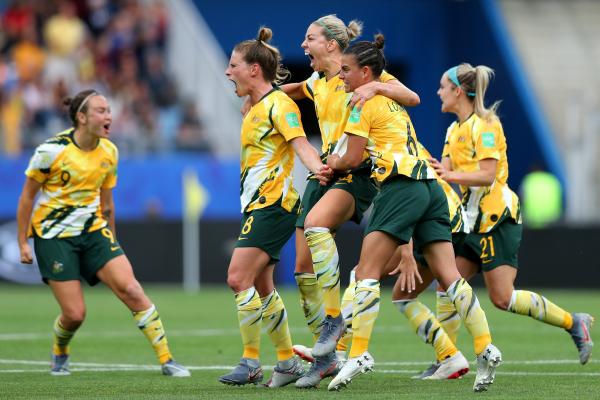
The Miracle of Montepellier, where Australia defeated Brazil 3-2. With the Matildas down 0-2 just before half-time, I was ready to give up, go to bed and wake up hoping for a miraculous comeback. But when Caitlin Foord scored just before the break to make it 1-2, I freaked out and stayed up til 2am for the whole match. It didn’t matter that I was delirious at work the next day after 3 hours of sleep, it was WONDERFUL.
Miracle AUS.jpg

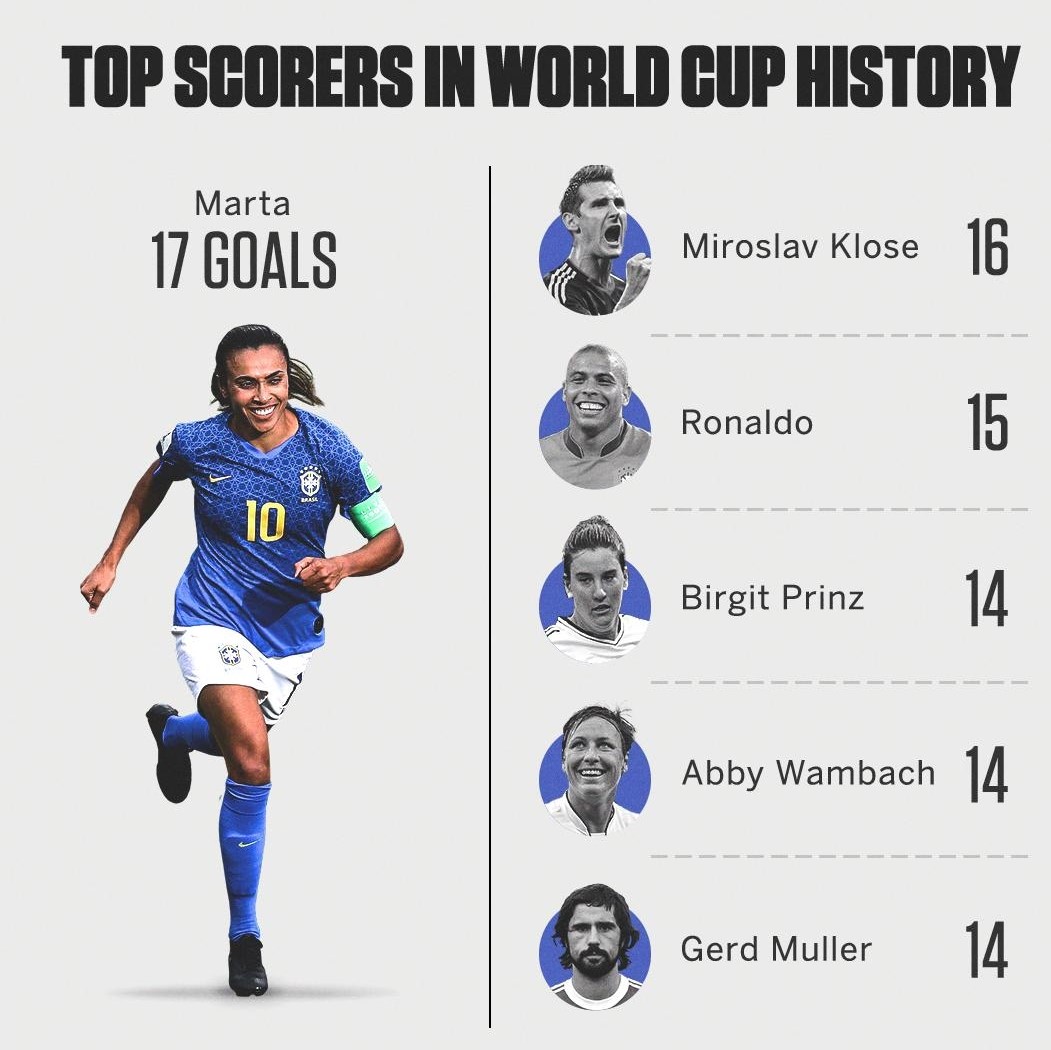
Marta breaking the World Cup record for goals scored (17), beating out Miroslav Klose’s 16
Marta record.jpg

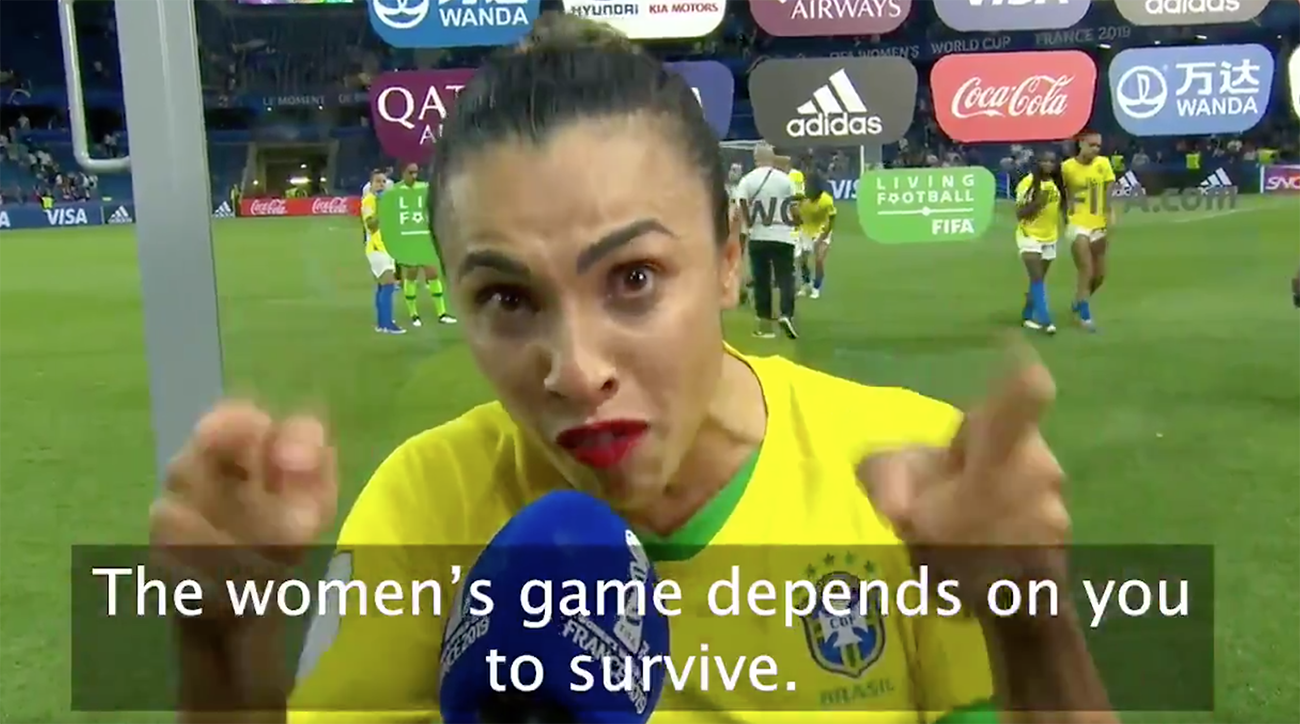
That record-breaking goal however was not Marta’s finest contribution this tournament, it was her passionate speech to the next generation of female Brazilian footballers.

“There’s not going to be a Formiga forever. There’s not going to be a Marta forever. There’s not going to be a Cristiane…the women’s game depends on you to survive. So think about that. Value it more. Cry in the beginning so you can smile in the end“. 

Her speech hurt though. She said it knowing this was likely the last World Cup for many veterans, such as Marta (5-time Ballon D’Or winner), Cristiane, Formiga and Barbara. The Brazilian team is and has been incredibly talented for the last decade or so, and have been failed by their federation time and again in terms of investment.
Marta speech.png

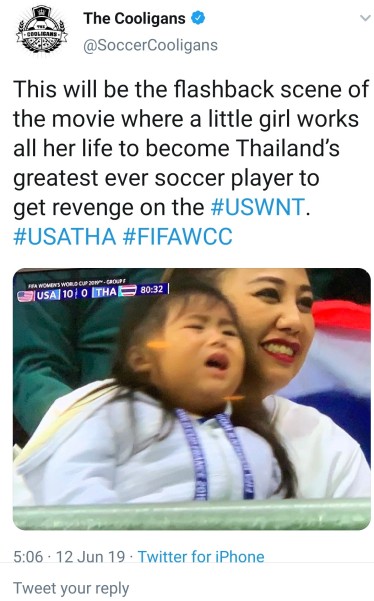
While Thailand getting smashed by the USA 13-0 wasn’t fun, I stan this tweet.
Thailand

The reactions of Thailand’s coach Nuengrutai Srathongvian and general manager / benefactor Nualphan Lamsam after captain Kanjana Sungngoen scored against Sweden. A magnificent answer to the carnage of their match against USA.
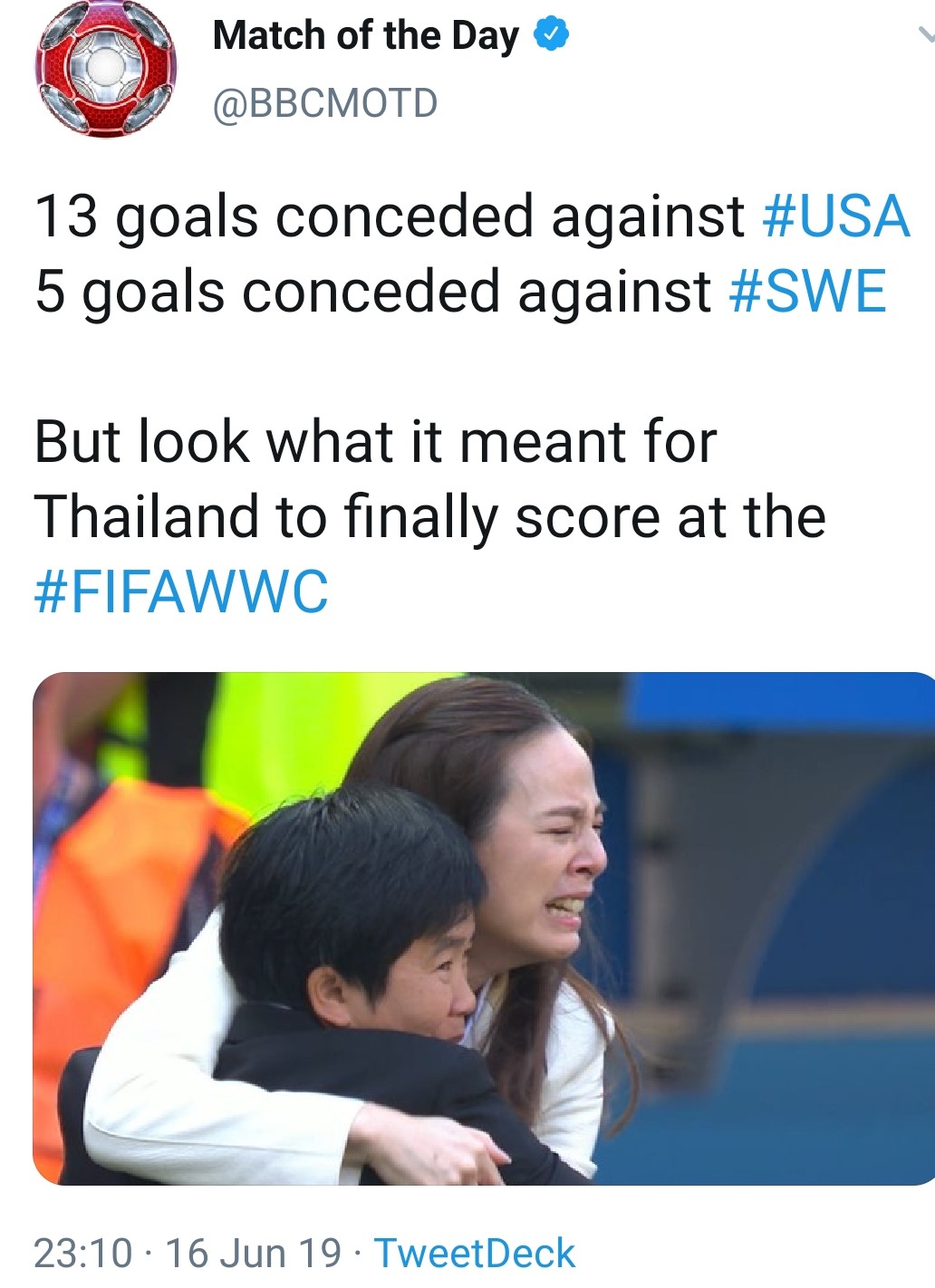
Thailand score

Vivianne Miedema breaking the Netherlands’ record (men and women) with her 60th goal, at the age of 22 years old, and celebrating it with a roly-poly that she had promised her brother she would do.
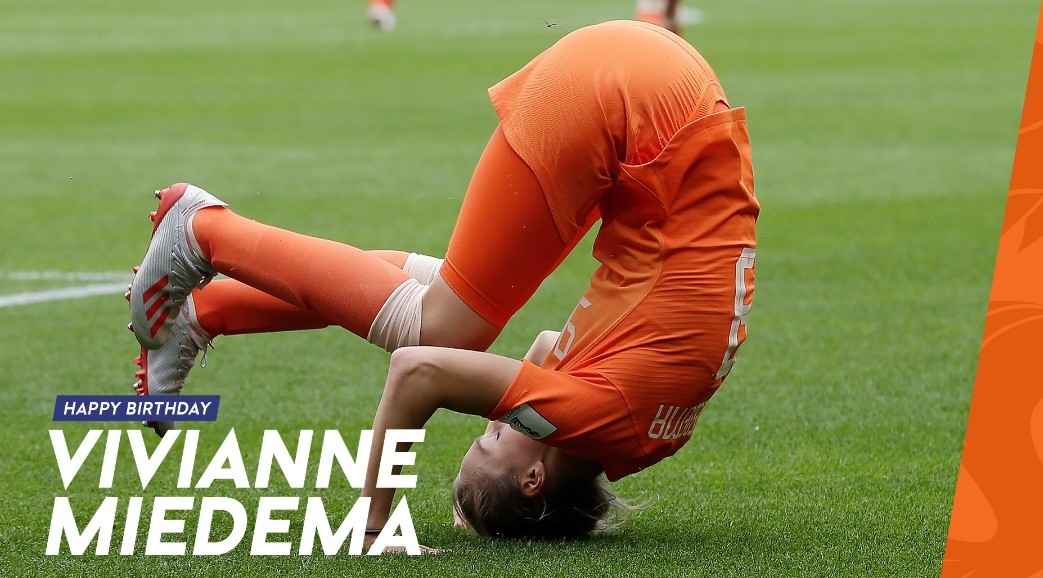
rolypoly.jpg

Erin Cuthbert scoring her maiden World Cup goal and her celebration thereafter. After scoring in Scotland’s final group game against Argentina, Chelsea striker Cuthbert celebrated by kissing the back of a photo of her younger self. Her father had given her the photo before the tournament, and wrote on the back “Do it for this wee girl who had a dream and practised and practised until it came true.”
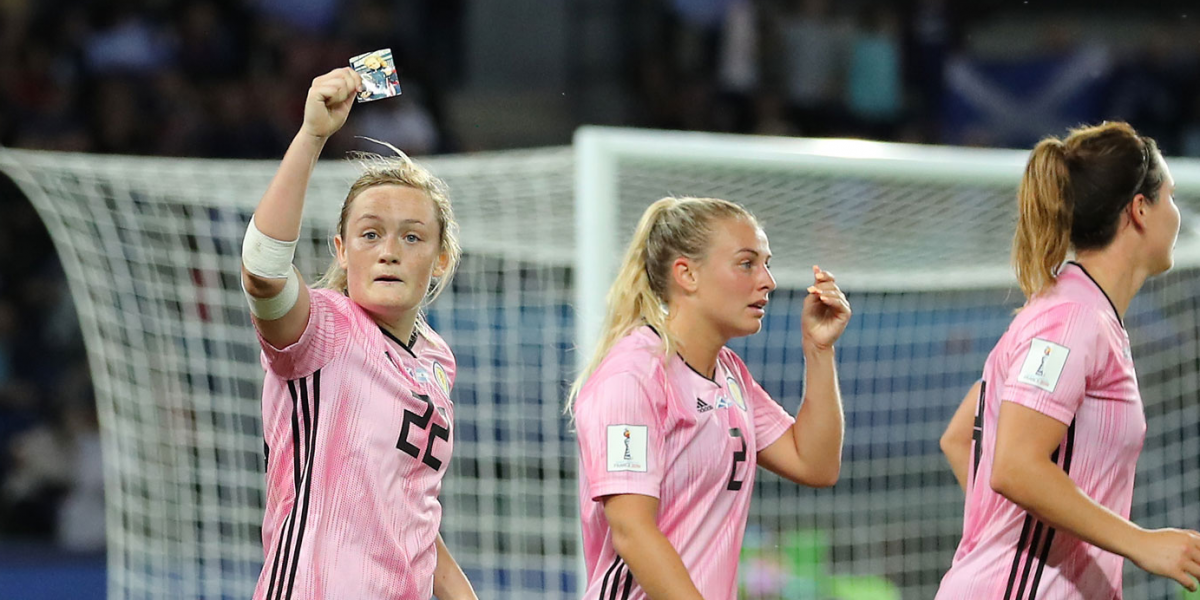
Cuthbert goal

This BBC montage released before the England v USA semifinal was brilliant and heartbreaking at the same time. I watched it after the match ended, and I nearly bawled.

Viewership was amazing, with records being broken all around the world again and again, starting from the opening match to the final.

France’s opening match against Korea attracted a record 9.83 million viewers in France, peaking at 10.9 million, obliterating the previous record of 4.12 million in France for a women’s football match. That’s 44.3% of French TV sets at the time. This record was then broken in France’s next match against Norway, with 10.302 million viewers. Their subsequent Round of 16 match against Brazil then attracted 12 million viewers (18% of the French population).

Brazil also smashed records, as all matches were available on national television for free. 19.7 million in Brazil watched their country beat Jamaica, that’s almost 50% of TV viewers at the time. An average of 22.4 million viewers then tuned in for Brazil’s match against Italy. Their Round of 16 loss to France was watched by a record 35.2 million on TV (that’s double the US audience for the NBA Finals). Despite getting knocked out at the Round of 16, Brazil provided the biggest viewership numbers for the USA v Netherlands final – with almost 20 million viewers. This was 41.7% of TV sets at the time, beating out Fox’s 27% in the USA.

For the Italy v Brazil match, Italy attracted a record 7.3 million viewers (6.53 million viewers on RAI 1 accounting for 29.3% of TV sets and 0.78 million across Sky Sport).

England also saw records being broken, as matches were broadcasted on the BBC. The peak audience of 6.9 million viewers (40% of market share) for England v Cameroon beat the previous record of 6.1 million when England beat Scotland in their opening game. This record was then beat by the 7.6 million who tuned in for England’s quarterfinal against Norway. This record was then toppled by the 11.7 million who watched England’s semifinal match against the USA (50.8% share of audience). For comparison, 11.3 million watched the men’s Champions League final on BT.

Netherlands also broke records, with 1.97 million (39.2% of market share) watching the England v USA semifinal. This was a record for a women’s football match not involving the Dutch team. For the Netherlands’ semifinal against Sweden, a record 5 million viewers tuned in (78.5% of market share, almost 1/3 of the population). More amazingly, 2.46 million viewers continued to watch the post-match analysis at the late hour of 11.45pm. For the final against the USA, 5.48 million viewers watched the match (88% of market share at the time, 34.5% of TV sets). This made it the most-watched Dutch television program since the 2014 Men’s World Cup final between the Netherlands and Argentina with 9.058 million viewers.

Eventual champions USA had records of their own broken as well. Over 7 million watched USA v England on FOX, making it the most-watched match in any sport played during a work/school day in the last 5 years. The audience of 15.277 million viewers on FOX and Telemundo for the final beat the channels’ audience of 11.3 million for the 2018 Men’s World Cup.

USA fans chanting “Fuck Trump” during a live taping of a FOX News segment in a bar in Lyon after the final. Sorry Donald.
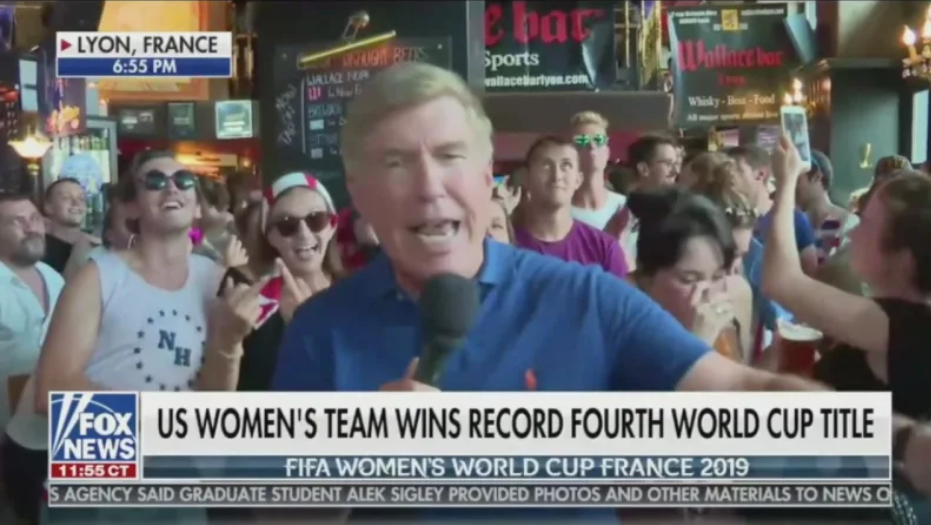
fktrump chant.PNG

The super cute graphics released before each match that featured players from both teams. I absolutely loved them.

The USWNT’s drunken bender in the hours and days following their victory, and Ashlyn Harris’ Instastories were the star of the show, especially as she says “you’re fucking welcome for this content, bitch!” She’s right. It is rare that we see female athletes let loose, and it’s brilliant when they finally do. Regarding Megan Rapinoe declaring “I deserve this. I deserve everything”, while propping a bottle of champagne against her leg during the parade, journalist Lindsay Gibbs wrote that it was “a pointed rebuttal to everyone who has ever told women that their worth was tied directly to humility and modesty…to tone down their happiness to make others more comfortable, to turn down compliments or brush-off accolades.”

10-uswnt-parade.w700.h467.jpg

Worst Moments

Australia crashing out at the Round of 16 at the hands of Norway. I hated that they played poorly, that Alanna Kennedy got sent off and that it went to a penalty shootout. As if the penalty shootout loss to Brazil in 2016 wasn’t enough. Poor Kennedy missed the decisive penalty then, and got sent off this time. No luck. For all the hype over the Matildas being a favourite (at best) or dark horse (at worst) to win the World Cup, this 2019 campaign was a disappointment.

Ellen White’s disallowed goals. Ellen White went from being a top contender for Golden Boot to being relegated to Bronze Boot when 2 of her goals were disallowed (against USA in the semifinals, against Sweden in the bronze medal match). Her tearful interview right after the semifinal was heartbreaking and it took me a week before I could bring myself to watch it.

Anything related to VAR was almost always a tragedy. 90% of referees’ decisions were overturned by VAR, and it became frustrating in certain matches where the referee relied too heavily on VAR (i.e. England v Cameroon). In almost every case, VAR ruined the tempo of the matches with the long pauses and reviews, and fans were left confused in the stadium with no replays being shown.

Let’s talk offside. There have been several VAR decisions on the offside positioning of players, and leading therefore to the overturning of goals. And in the worst cases, the players had maybe a toe offside.

Example 1. Ellen White’s second goal against the USA in the semifinal that would have been the equalizer to make it 2-2.

england-ellen-white-offside

Example 2. Cameroonian Ajara Nchout’s goal against England was disallowed because there Gabrielle Onguene was in an offside position in the lead-up to the goal. Arguably in the new rules introduced by FIFA (a week before the tournament started – I will get more into this later), goals stand if a player is in an offside position but have not interfered with play (see Sam Kerr’s role in the decisive and controversial Monica own goal in Brazil v Australia). In this case, Onguene was not interfering with play while in this offside position, she was walking away from the goal. Yet, goal disallowed.
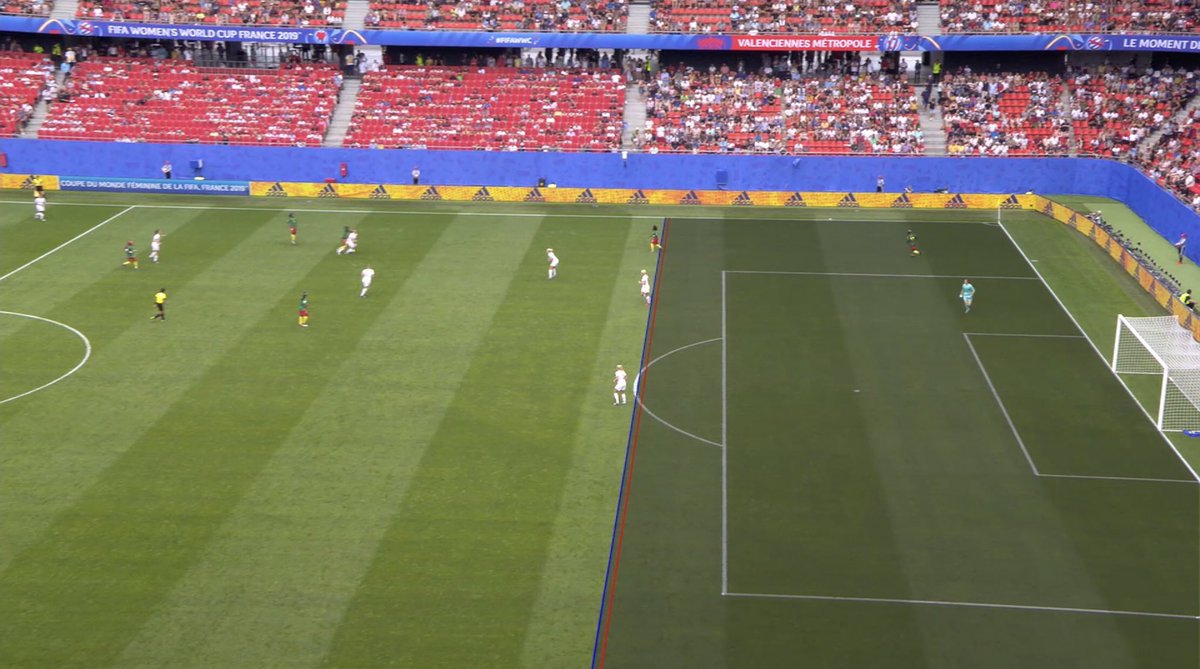
CMR offside.jpg

The inconsistent application of the new rules was also awful.  A new rule on penalties states “The goalkeeper must have at least part of one foot on/in line with the goal line when the kick is taken; cannot stand behind the line.” Goalkeepers who fail to do this will receive a yellow card, and the penalty will need to be retaken.

In an ideal world, this new law seems okay, it would stop goalkeepers from coming way off their lines when saving penalties.

However, this turned out to be one of the most controversial new laws, when combined with the oversight of VAR. It reared its ugly head in a couple of critical moments in the early stage of the tournament that affected teams in a huge way.

Nigeria v France in their final group match: to me, it made zero sense for the referee to order the penalty to be re-taken when Nigeria’s goalkeeper Chiamaka Nnadozie was adjudged to have one foot slightly off her line, when Wendie Renard’s penalty had struck the post to begin with. Renard scored on the retake to give France the 1-0 victory which nearly cost Nigeria a place in the Round of 16.
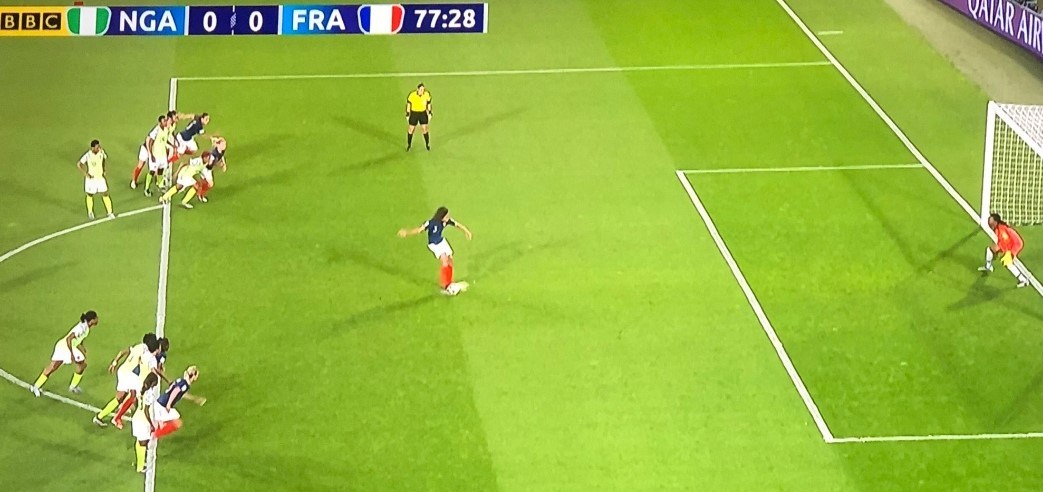
nigeria-var.jpg

You’d have to zoom in really hard to see that the keeper’s foot is a little bit off the line

Scotland v Argentina in their final group match: this was the worst, because Scottish goalkeeper Lee Alexander’s initial save would have sent Scotland to their first ever Round of 16. The subsequent retake saw Argentina score to tie the match 3-3, and deprive both countries of a Round of 16 spot. Heartbreak for Scotland. I was not ready for Erin Cuthbert’s tears at the end of the match.
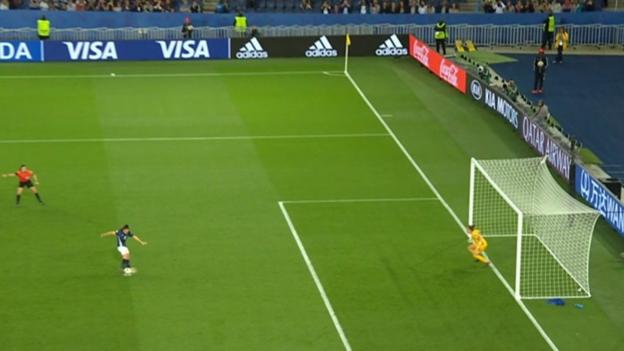
_107470921_var_penalty

England manager Phil Neville was a blemish on this World Cup.  After England’s rather ugly victory over Cameroon, he lambasted the opposition instead of admitting that his own team hadn’t played very well. Beyond suggesting that Cameroon’s coach Alain Djeumfa needed to “get his ship in order”, his following comments were awful: “I sat through 90 minutes today and felt ashamed. I’m completely and utterly ashamed of the opposition and their behaviour…I think that kind of behaviour is pretty sad. Think of all those young girls and boys watching.

Firstly, if he thinks Cameroon’s behaviour is “shameful” for football, has he even stopped to consider what truly constitutes as shameful in football? How about the corruption in FIFA, how about the failure of federations to compensate their players (i.e. Nigeria), how about the sexual abuse suffered by the Afghanistan women’s football team at the hands of the president of their football federation?

afghanistan-wnt.jpg

Secondly, why should Cameroon care about the young girls and boys watching? Women’s football isn’t inspiration-porn. Zidane headbutted Materazzi, and a statue was built in France to commemorate it. Suarez bit Chiellini. Terry was a racist to Ferdinand. Drogba slapped Vidic. No one asked if these male players ruined football for little boys. Double standards.

Thirdly, Neville’s comments were patronising, arrogant, racist and reeked of colonialism. For someone who has very little managerial experience in football (men’s or women’s), who was offered the job of England manager without even asking for it, he was extremely full of himself. I’m not sure how much of his inexperience has led to his poorly worded and unnecessary comments to the media this tournament. He accused the USA team for spying on the England camp and sounded like a sore loser when he dismissed the bronze medal match as “nonsense” after losing to Sweden. For this, he was rightly criticized by former England players Eniola Aluko and Siobhan Chamberlain, as it was an insult to the England squad who proudly won the bronze medal in 2015.
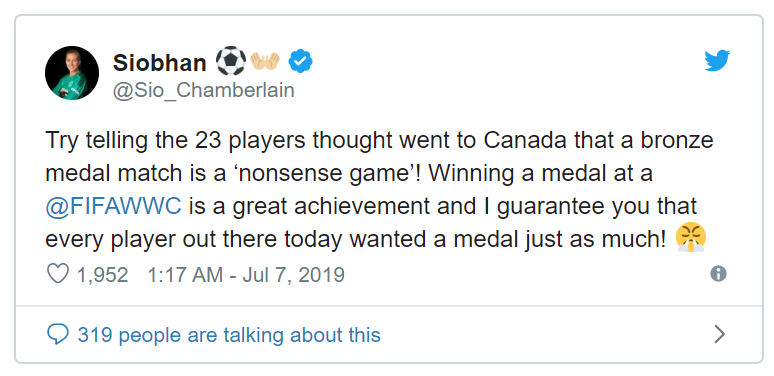
Siobhan Chamberlain

As a complete aside, Sweden certainly did not treat the 3rd-4th match as a nonsense match. Look at how they celebrated at home with 30,000 fans in Gothenburg.

Sweden celebration.jpg

For further readings on Neville’s shortcomings as a manager, journalist Sophie Lawson summed it up perfectly in her criticism of Phil Neville’s tactics in her piece here. 

The heat wave in Lyon was killer. Being crammed in with other sweaty commuters in the aircon-less metro and trams made me feel like I’d entered a sauna everytime I stepped in. Staying in an Airbnb without aircon also means opening the windows, but then suffering the incessant noise from the road below and not being able to sleep for hours on end. Also stuffy cafes with no aircon, fans or functioning ice-machines.

Best Goals

Lucy Bronze’s goal against Norway was spectacular. How fitting that she scores yet another belter against Norway this World Cup just as she did against them in 2015.

Cristiane’s free-kick against Jamaica in their opening match. That smirk on her face as she watched the ball’s trajectory…she knew it was going in. Such a baller.

Aurora Galli‘s goal against Jamaica taken from just outside the box. 

Total Surprises

Italy! Le Azzurre announced themselves with a bang when they beat Australia 3-2 (I am still deeply upset about this result for the Matildas). They’ve been absent from the tournament for 20 years, and have rejoined the ranks, due in part to the expansion of the tournament to 24 teams, and the significant investment the Italian federation and clubs have made in their women’s programs. I absolutely did not expect them to top their group, let alone make it to the quarterfinals, but wow it was hard to root against them. The coverage and love they were getting back home was amazing.

Feeling like I was in the US at times in Lyon, particularly in the cafes in the city center. There were an estimated 20,000 Americans in Lyon, which was hosting the semifinals and final. How typically American for them to have been sure that their team would make it into the final. It was overwhelming at times and a bit of a mind-fuck to be surrounded by so many Americans while in France.

Kelley O’Hara casually coming out after the final by kissing her girlfriend in the stands. Yes she was probably concussed at the time (that head-on collision with Lieke Martens in the first half looked awful), but she knew that there were cameras everywhere, and she made a decision.

Australia bombing out so early. I had wishfully predicted Australia to make it to the final before the tournament started. Ironically, I had predicted a R16 involving Australia v Norway, but the circumstances were very different – Australia topping their group and Norway being the 3rd place team in their group. In the end, both came in 2nd in their groups. I feel so stupid now. I never got to wear my Sam Kerr jersey at the World Cup.

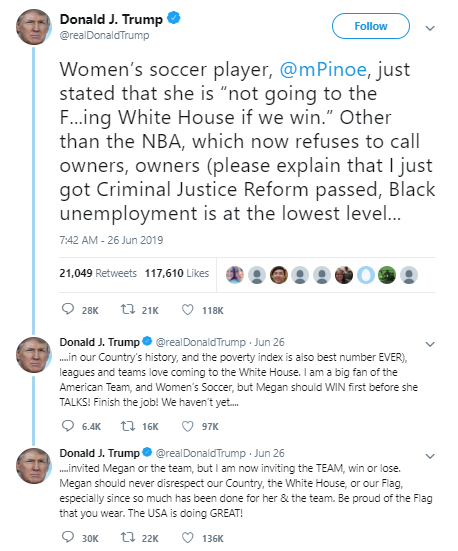
Megan Rapinoe v Donald Trump was a storyline I did not see coming at all. While I had expected some backlash when non-regular woso viewers who tune in to USA matches and see Rapinoe not singing the anthem, no one expected the video of her saying “I’m not going to the fucking White House” going viral. For context, this video was filmed in January, and Rapinoe herself was surprised when it was publicized before the France v USA quarterfinal. An ally for the Black Lives Matter movement, Rapinoe was the first white athlete to kneel for the anthem (in 2016) in solidarity with Colin Kaepernick, and is an activist for the LGBT+ community. To the surprise of everyone (or no one), Trump raged out on Twitter. I don’t know why he mentioned “black unemployment”. Maybe he thought Rapinoe was African-American?!
Trump Rapinoe tweet.PNG

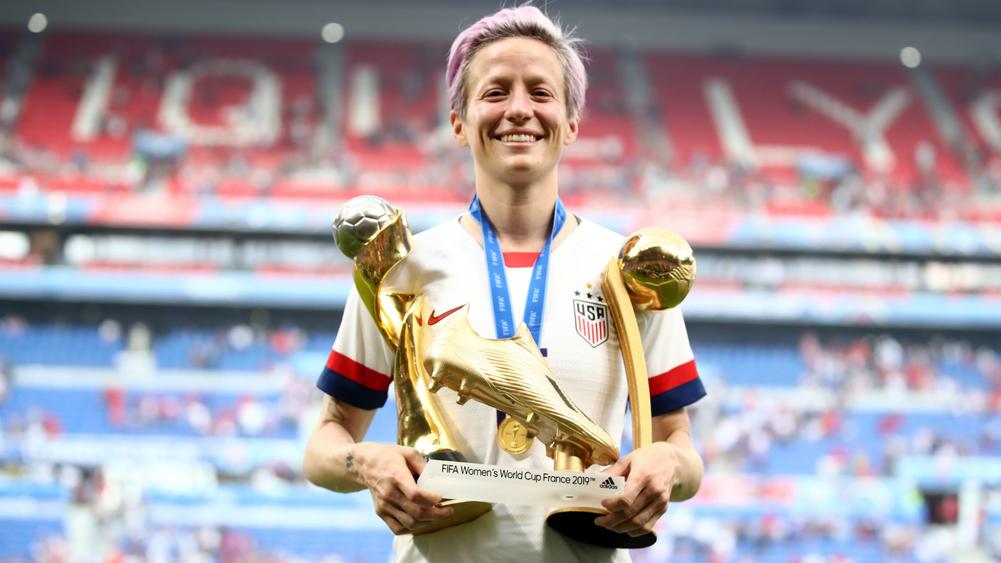
Perhaps in response to Trump’s suggestion that she should “WIN first before she TALK”, she went ahead and won the World Cup, Golden Boot and Golden Ball. *shrugs*
rapinoe wins.jpg

In various press conferences and interviews since the video went viral, Rapinoe has been using her platform and growing fame to speak eloquently and with nuance about controversial issues (i.e. equal pay, racism, homophobia, American politics etc.). Her speech at the USWNT’s victory parade in New York was brilliant. What’s more brilliant is that she was probably drunk and/or hungover while making this speech.  Here is an excerpt:

“This is my charge to everyone. We have to be better. We have to love more. Hate less. We got to listen more and talk less. We got to know that this is everybody’s responsibility…It’s our responsibility to make this world a better place.”

Her recent appearance on the Late Night with Seth Meyer has fully convinced me that we all need an episode of Seth and Megan Go Day Drinking. Now.

Final Thoughts

While it’s going to be an awfully long 4 years waiting for the next World Cup, wherever it may be, there’s still plenty of women’s football to watch in the meantime.

For international tournaments, Tokyo 2020 is coming up (I hope to get tickets) and the Women’s Euros 2021 in England.

However, the most important part of driving the growth of women’s football is supporting the domestic leagues, whether it’s in terms of going to the matches or watching it when it’s on TV. Boosting match-day attendances and TV ratings is crucial to convincing the big corporations that women’s football is a product that is popular, valued and worth investing in. The players gracing the international stage are playing day-in-day-out in these domestic leagues. It’s cheap to attend their matches, and you get to see the players up close, not like in the men’s games (at least not within forking out 3 or 4 figures). When I attended WSL matches in England, I have to say, it was quite surreal seeing BBC Women’s Footballer of the Year Asisat Oshoala standing a few feet away from me. Get out to the matches people!

Whether it’s the NWSL (USA), WSL (England), Division 1 Feminine (France), Frauen Bundesliga (Germany), Damallsvenskan (Sweden), Primera Divisione (Spain), Serie A (Italy), Nadeshiko League (Japan), Chinese Women’s Super League (China)… go out there and support the players. I know I need to be better about attending the Women’s Premier League in Singapore.

I hope federations and corporate companies continue to invest in women’s football, and invest more than they are at the moment. Some good news has come out since the World Cup ended: Budweiser announced a multi-year deal to be the NWSL’s first beer sponsor and Alibaba pledged US$145 million in Chinese women’s football.

Another storyline to look for in the upcoming weeks and months is the USWNT’s lawsuit against US Soccer. As back-to-back champions, the USWNT have more leverage now than they ever had before, and are riding on the back of popular support across the country. It will be interesting to see if that will affect the legal outcome.

What a month it has been, I can’t wait for the 2023. Here’s to hoping for a solid 4 years of women’s football development meanwhile.


10 Reasons to get Excited about the 2019 Women’s World Cup (Part 5)

In this final edition of the 5 part series of reasons to get excited for the 2019 Women’s World Cup, I will address the last 2 reasons.

#9: The classic musical montage moments

Every major international tournament is accompanied with a beautiful montage of the best moments with fans and players, along with a sick piece of music. Music is an integral part of memory, and I’ve always associated a song with a major tournament. There were the official songs of Crazy by Gnarls Barkley (2006 World Cup), Waka Waka by Shakira (2010 World Cup) Happiness by Alexis Jordan (2011 World Cup), and the unofficial songs tagged to promotional videos or montages such as Crystals by Monsters and Men (2015 Women’s World Cup BBC montage), Rule the World by Walk Off the Earth (2015 Women’s World Cup CTV and TSN montage), Rise by Katy Perry (2016 Rio Olympics), and Whatever It Takes by Imagine Dragons (2018 Pyeongchang Winter Olympics). I do wish there is an official song for the 2019 Women’s World Cup, because viewers do tend to associate music with an event. But nonetheless until that happens, I am content with music montages with great songs set to clips of fans rejoicing, golazos, celebrations and the like. Just to jog your memory with a few clips from the previous World Cup

BBC 2015 Women’s World Cup Montage

CTV and TSN 2015 Women’s World Cup Montage

FOX 2015 Women’s World Cup Montage

Montages capture the very essence of the tournament, and hearing the songs gives me major flashbacks. Hearing Crystals still gives me goosebumps every time and reminds me of Canada, hearing Crazy makes me feel like I’m 14 again and Waka Waka reminds me of the time I wept when Australia got smacked by Germany in the group stages in 2010.

#10: The legacy of the tournament

With every major international tournament showcasing the best women’s football in the world, be it the World Cup or Olympics, there is always an expectation that it will trigger further growth of the women’s game.

A. Domestic leagues

Domestic league around the world are expected to see a bump in match attendances and increased coverage after the World Cup or Olympics, but the challenge arises from the attempts to sustain this growth and retain fans’ interest and engagement. Generally speaking, major tournaments open the doors to either the creation of a domestic league or the rise in attendance of domestic leagues (with the caveat that the matches were covered by the media in the first place).

In the USA, on the heels of the high of the team’s performances in the 2011 World Cup where they made an incredible comeback win against Brazil in the quarterfinals before losing to Japan dramatically in the finals, and their triumphant rematch over Japan at the 2012 London Olympics finals, and the lows of the WPS’ (Women’s Professional Soccer) collapse in 2012, a new league – the National Women’s Soccer League (NWSL) was set up. The NWSL’s lifespan has so far surpassed that of its predecessors of WUSA (Women’s United Soccer Association) and WPS. Despite the NWSL’s shortcomings with several teams folding (i.e. Western New York Flash, FC Kansas City), the difference is that the folded teams have relocated, and there is still talk of expansion. Attendance has also been increasing, with an average of over 6,000 fans per game, and a 19% bump in average attendance from 2017-2018. The Portland Thorns set a league attendance record for regular season home game with 16,945 fans per game. I don’t know if there is any club in the world that can boast of such impressive attendances regularly.

But more often than not, countries struggle to translate national team success and popularity into attendances at the domestic league level, as proven by the WSL in England and the W-League in Australia.

England’s national team (aka the Lionesses) has been increasing in popularity at home since their successful run in the 2015 Women’s World Cup. In the 2017 Euros, England’s semi-final against Holland was watched by a television record of four million people. There might be a correlation between the popularity of the Lionesses and popularity of domestic teams, as Manchester City Women, whose squad had the highest percentage of Lionesses (e.g. Stephanie Houghton, Jill Scott, Izzy Christiansen, Toni Duggan and Lucy Bronze) at the time in 2016, saw the highest attendance in WSL1 as well as a 50% rise in attendance to 2,253 in average attendance in 2016.
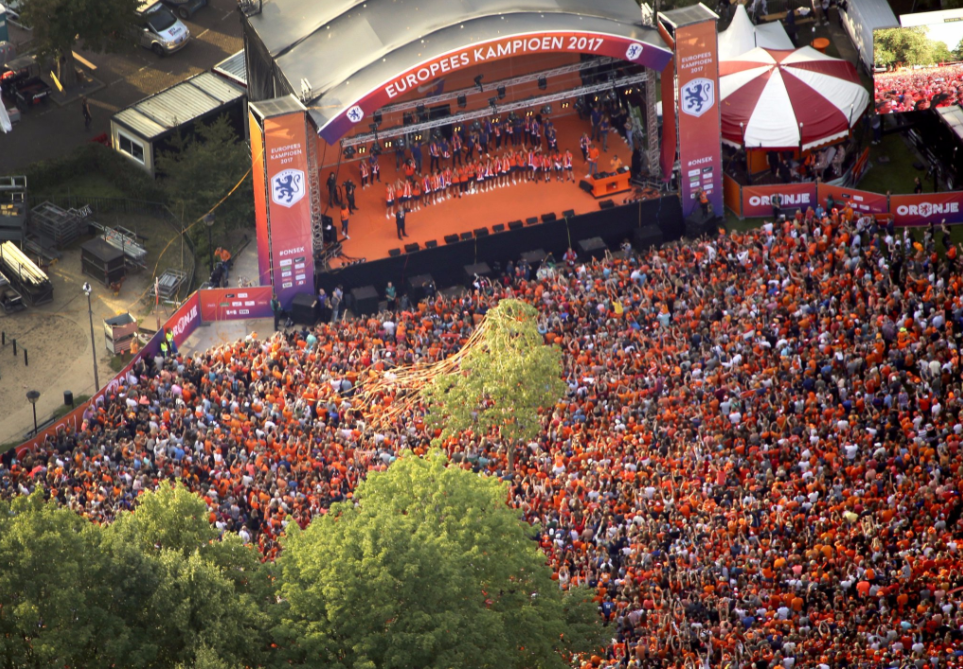
Unfortunately, in 2017 WSL1 attendance figures dropped 11% from 2016, after seeing a measly 1.5% growth according to BBC Sport (less than the 5% reported by the FA).

Attendance WSL

Generally, a mixed bag across WSL1 teams 

There are several potential reasons for this.

One contributing reason could be the location of the stadiums, which are often not close to their primary fanbase. Liverpool Ladies play at Select Security Stadium (12 miles from Anfield), and Chelsea Women play at Kingsmeadow (previously Wheatsheaf Park, 17 miles from Stamford Bridge) which are located in the Southwest of London (8 miles from Stamford Bridge). Manchester City Women, who had seen an increase in attendance, plays in the Academy Stadium, which is part of the Etihad Campus in the vicinity of Etihad Stadium.
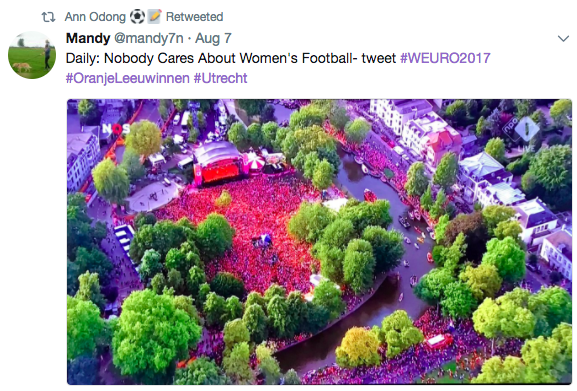
A second reason would be the change in calendar of the WSL season since 2017/18 from a spring/summer one to a winter/spring one that aligns with the men’s calendar. It is a significant change for fans, who are now having to stand/sit in the cold and rainy (or snowy) weathers rather than the more pleasant summer months. With clashes in the men’s and women’s matches, fans are forced to pick one to go to. A good example of this clash was the denial of West Ham’s request to change the kickoff time for the men’s final home game against Southampton, so that fans could watch the women’s team in the FA Cup final against Manchester City in Wembley.

Oddly, despite the general fall in WSL attendance, marquee domestic events such as the FA Cup held at Wembley between West Ham and Manchester City saw a record attendance in 2019, with 52,000 tickets sold. This surpasses the previous record of 45,423 in 2018 between Chelsea and Arsenal, which in turn surpasses the previous FA Cup record of 35,271 set in 2017 in a clash between Birmingham City and Manchester City. While this positive upward trend of FA Cup attendance is comforting (47% growth from 2017 to 2019), the FA has much soul-searching to do if they are capitalize on this year’s World Cup to drive the women’s game.

Australia’s W-League is another interesting case study when it comes to the correlation between national teams’ performances and their domestic league attendance. Overall attendance for the W-League increased by 47% between the 2016/17 and 2017/18 seasons (from 86,949 to 127,494), but fell by 9% between the 2017/18 and 2018/19 seasons (12,000 fewer people). These 3 seasons have coincided with the increased popularity and visibility of the Matildas, as they have racked up impressive victories in international tournaments such as the 2017 Tournament of Nations and the 2019 Cup of Nations this year, and captain Sam Kerr is now the face of Nike Australia. The Matildas have also been selling out international matches on home soil, such as the friendly against Brazil  in 2017 and against Chile in front of a record Sydney crowd of 15,185.

It will be interesting to see if Australia’s performance in this year’s World Cup can be translated to success for the W-League when it comes to attendance and attention. Afterall with the #GetOnside campaign for Australia to host the 2023 Women’s World Cup, driving the popularity of women’s football is surely a priority for the FFA (Football Federation Australia).

B. Benefits and working conditions

Major tournaments can also provide the momentum and leverage for the players to ask for better working conditions. After their run to the quarterfinals in the 2015 World Cup (the best performance by a male or female Australian team), the Australian national team went on strike in September 2015 to demand for improved pay and benefits. The FFA had rejected the PFA’s (Players’ Football Association) proposal for 14 Tier 1 players to earn ~ $40,000 a year, and 6 Tier 2 players earning ~$33,000 a year, deeming it “unaffordable”. The previous base salary for players was only $21,000. But in the face of the Matildas refusal to budge and withdrawal from the scheduled friendlies with the USWNT, along with other national teams’ players’ support of the Matildas, the FFA caved and agreed on new terms: $41,000 a year for Tier 1 players, and $30,000 per year for Tier 2 players.

Morgan tweet.PNG

US star forward Morgan expressing solidarity with the Matildas when they went on strike

Similarly to Australia, the Nigerian women’s national team also took a stand against their federation after winning the African Cup of Nations in 2016. The Super Falcons failed to receive their allowances and bonuses amounting up to US$17,150 per player for winning the tournament. The federation had also failed to pay outstanding allowances for qualifying and win bonuses worth US$6,500.

Following their surprise 2nd place finish at the Euros 2017, the Denmark national team went on strike after negotiations over a “grotesque” dispute over players’ contracts which had been ongoing for 11 months collapsed. As a result of players going on strike and failing to report for training, Denmark’s World Cup qualifying match against Sweden was canceled. The dispute was centered around whether the players were employed by the DBU, which would entitle them to equal pay as the men. Even an offer from the men’s national team players to give up 500,000 DKK (£60,000) a year from their agreement with the DBU to the women’s national team was rejected by the DBU. In late 2017, the women’s team ended up signing a four-year collective bargaining agreement with the DBU, but details of the agreement has been scarce.

The Netherlands team saw a “significant” increase in wages following their victory on home soil at the Euro 2017. While the financial compensation was not disclosed, the wages have apparently been “multiplied“.

In the USA, the USWNT is currently embroiled in a class-action gender discrimination lawsuit that they have filed against US Soccer. The team cited “institutionalized gender discrimination”, and was filed under the Equal Pay Act and Title VII of the Civil Rights Act, seeking equitable pay and treatment, including back pay. It will be interesting to see the extent to which the outcome of the lawsuit and the level of public support afforded to the USWNT will be influenced by the USWNT’s performance in the World Cup. Personally, I cannot imagine US Soccer walking away from his lawsuit unscathed if the USWNT emerge as champions of the 2019 Women’s World Cup.

In conclusion

I have listed 10 reasons as to why we we should be excited for the 2019 Women’s World, in the hopes that anyone reading this who hasn’t watched women’s football before might perhaps tune in to watch in less than a month’s time on 7th June.

The 2015 Women’s World Cup was incredible, and I’m convinced that the football is going to be even better this year.

1 month of incredible football this summer.

Another 4 years worth of growth of women’s football afterwards.

I can’t wait.


10 Reasons to Get Excited about the 2019 Women’s World Cup (Part 4)

In Part 3, I had speculated about whether the traditional ageing giants of USA and Germany would still be able to perform at this World Cup, and whether the rising teams such as England, Australia and Netherlands that have oft been talked about would be able to have their breakthrough and a chance at victory.

In this Part 4, I will be writing about 2 further reasons to be amped about the Women’s World Cup this summer: the countries making their debuts at the World Cup, and analysing the host nation France – will they rise to the occasion or fall (as they usually do) at major tournaments?

#7: How will the debutantes fare this tournament?

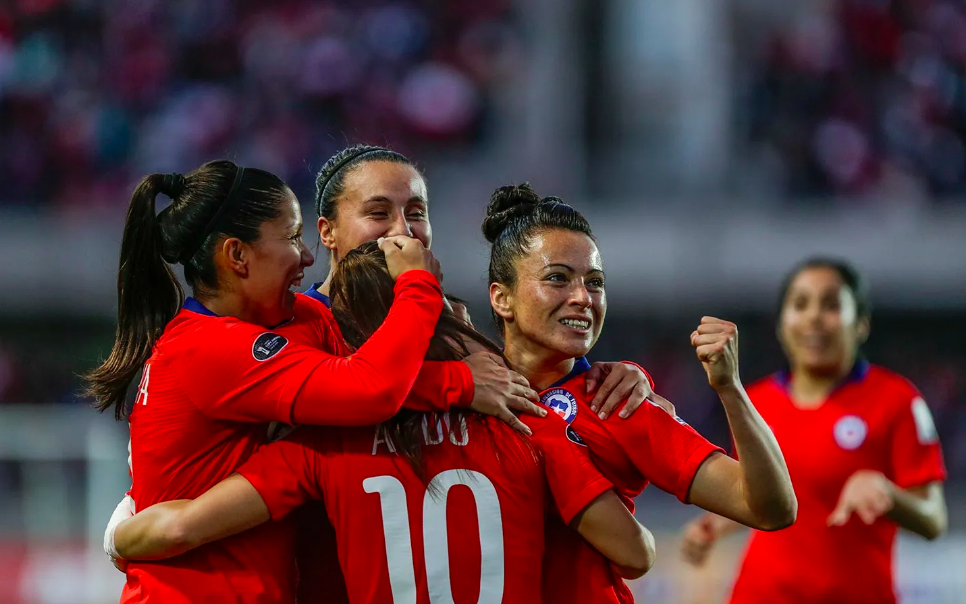
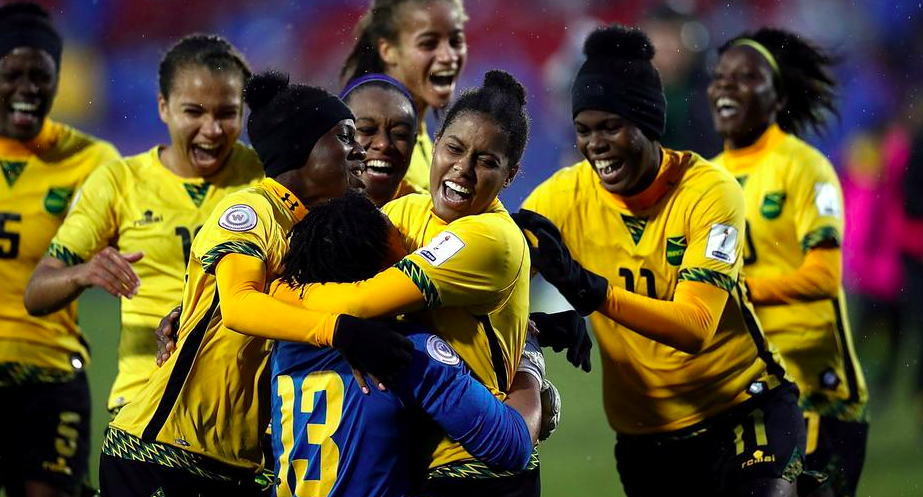
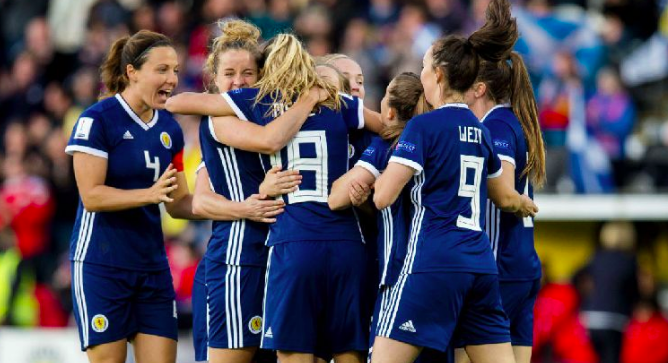
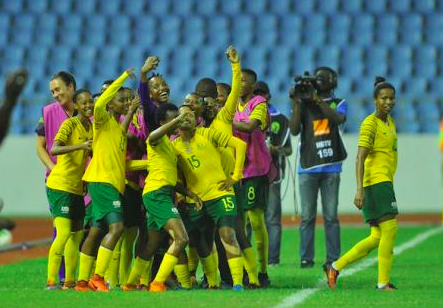
As this World Cup has seen an expansion of the number of participating teams from 16 to 24, it has opened the door to new countries to have a shot at the World Cup. Chile, Jamaica, Scotland and South Africa will be making their debuts.

Chile defeated Argentina 4-0 in the Copa America in front of 18,000 fans to qualify for their first Women’s World Cup, joining the likes of Brazil and Argentina. Las Chicas de Rojo are ranked 39th, and several of their top players ply their trade overseas. Goalkeeper Christiane Endler plays for Paris Saint Germain, while midfielders Karen Araya and Francisca Lara play for Sevilla, and defender Carla Guerrero for Rayo Vallecano Femenino in the first division in Spain. Fullback Fernanda Pinilla and forward Yanara Aedo play for second division side Cordoba in Spain. Players are forced to go overseas because Chile does not have the professional women’s league – it is run on an amateur basis where players are not full-time. Chile is an interesting team to watch out for, with varied results in the past year. Although they got smashed by the USA 4-0 and 3-0 in friendlies in the 2018, they also beat Australia 3-2, before getting thumped 3 days later 5-0. More recently, they lost narrowly to Italy 2-1, drew with Scotland 1-1, lost to Jamaica 2-3, and got wrecked by Netherlands 0-7. Will the real Chile please stand up at the World Cup? Tough group for them, getting roped in with Sweden and USA. I think they will stand a chance against Thailand though. If they can nick 3 points off Thailand, and have a good goal difference (i.e. not get smashed by Sweden and the USA), there might be a chance Chile can make it to the Round of 16. What is inspiring about the Chile team though is not their results per se, but the players’ work to improve their work situation for themselves. In 2015-2016, the players collectively started a players’ union  when the team fell apart during the FIFA scandals. The union managed to get a TV station in Chile to cover the entire Copa America tournament that Chile was hosting in 2018 for the first time. Through the collective effort by the union to drive coverage of their sport, the Copa America tournament saw impressive attendances, with approximately 200,000 people watching the tournament (an average of ~7,700 per game). I hope their run through the tournament will be covered back home, and inspire a new generation of players at home.

Screen Shot 2019-04-21 at 9.48.15 PM

Chile celebrating their win over Peru in the Copa America Feminina

Jamaica defeated Panama in a penalty shootout (4-2) in the CONCACAF qualifiers to earn their first-ever World Cup spot. That match was tough one to watch, because both Jamaica and Panama have never participated in a World Cup, so stakes were high. As with several Caribbean nations such Haiti and Trinidad and Tobago, many of Jamaica’s players grew up in the USA, and chose to play for their parents’ home country. What is particularly interesting about Jamaica is the fact that they are funded to a large extent by Cedella Marley, daughter of the Bob Marley. That is perhaps what truly separates Jamaica from the other Caribbean teams such as Haiti and Trinidad and Tobago who struggle to be competitive due to the lack of federation funding. In 2010, the Jamaican women’s national team had been disbanded after the federation cut its funding, and the team was only revived in 2014 when Marley stepped in as an ambassador and sponsor with the Bob Marley Foundation. This has paid off, with the Reggae Girlz qualifying for the World Cup, ranked 53rd, and ready to show off their dancing skills in the tournament, celebrating goals and victories (hopefully). Ok maybe victories is a tough one, because they are in the same group as Australia, Italy and Brazil.

Screen Shot 2019-04-21 at 9.49.43 PM

Jamaica celebrating their penalty shootout win against Panama

Scotland is a team that I am particularly excited about. Although they are ranked 20th, they are team full of great players that has been unfortunate to not have been able to qualify for the World Cup thus far, due to the hugely competitive European federation they fall under and the limited number of spots previously. This will be Scotland’s second major international tournament, having participated in their first Euros in 2017. A good number of their players ply their trade in the FAWSL such as Erin Cuthbert (Chelsea), Kim Little (Arsenal), Jennifer Beattie (Manchester City) and Lisa Evans (Arsenal). Meanwhile, captain Rachel Corsie (Utah Royals) plays in the NWS. For me, Kim Little is the Scottish player to watch. She is a midfield engine with impeccable vision and touch, and she can be a goal machine. She won the NWSL MVP and Golden Boot in 2014 when playing for the Seattle Reign (now Reign FC). She unfortunately missed the Euro 2017 due to an ACL injury, but I am hopeful for her to make a great impact for her team in the World Cup. Erin Cuthbert has also been on fire for Chelsea, scoring 11 goals in 33 games this 2018/2019 season so far (including a wonderful volley against Lyon in the Champions League semifinals) and is nominated for the PFA Women’s Player of the Year shortlist. Scotland is a team to look out for, and it seems quite apt that their first match in the tournament will be against neighbours England.

Screen Shot 2019-04-21 at 9.54.03 PM

Scotland celebrating their qualification after a 2-1 win over Albania

South Africa is ranked 49th, and defeated Mali 2-0 in the semifinals of the Africa Cup of Nations to earn their spot in the tournament. They are led by coach Desiree Ellis and captain Janine van Wyk who plays for the Houston Dash in the NWSL. Banyana Banyana will have to count on their international experience in the Olympics to hold their own in the World Cup. The team will have to work hard to find their form, as they have been without a win in their last 7 matches in their pre-World Cup preparations. Their upcoming friendly against the USA should be interesting, which will no doubt be a tough challenge for the South Africans. Without a regular league in South Africa for the majority of the team to hone their craft, and the fact that they are in a group together with Germany, China and Spain, South Africa is going to find it tough to make it into the knockout stages.

Screen Shot 2019-04-21 at 9.57.11 PM

Banyana Banyana celebrating their qualification with a victory over Mali

With the exception of Scotland, it is unlikely that any of the teams making their debuts will make it out of the group stage. As with Thailand who made their debut in 2015, I had a sinking feeling of dread when they were drawn into the same group as Germany, and had expected a rout when they played Germany. However, Thailand surpassed my (and I think many people’s) expectations when they only conceded 2 goals to Germany, and earn their first World Cup victory against Ivory Coast. I hope that the teams making their debuts this time will have that similar euphoria, because everything is going to be a first for them.

#8: France, will they sink or will they rise?

France is facing quite a momentous challenge this summer, for multiple reasons. Firstly, as hosts, they need to contend with the pressure of performing well for the home crowd. Assuming they make it into the semifinals and/or finals, the stadiums should be rocking with support for the hosts, since the final has already been sold out. The opening match of France versus South Korea in Parc de Princes in Paris has also already been sold out, and overall 720,000 tickets have already been sold for the tournament, The home support no doubt galvanised Netherlands in the Euros 2017, with all their matches being sold out, so the question is whether performing in front of a home crowd will buoy France, or backfires spectacularly and causes them to choke. This leads us to the second reason.

The reality is, France has a terrible habit of choking in every major tournament, despite having an impressive squad. Just look at the Euros 2017 where they crashed out surprisingly against England in the quarterfinals (losing to England for the first time in 43 years), or in the 2015 World Cup when they fell to Germany in a quarterfinal penalty shootout, or in the 2012 Olympics when they lost to Canada in the bronze medal game.

The third reason may well perhaps be the most painful challenge, as the women now face the expectation to match the achievement of the men who won the 2018 World Cup., and the 1998 men’s team who won the World Cup on home soil. The sports media has already been rife with speculation of whether the women can do it. France’s coach Corinne Diacre even stated her wish to “copy what the men did in 1998“, and also cited the success of France’s women’s handball team who won the European championship in France in 2018.

With the talent of the French squad, winning the tournament is absolutely an achievable task. Their players have good chemistry, and are regular first team players in top tier French clubs such as Olympique Lyon, Paris St Germain and Montpellier. The team is strong across the board, and there are few things for them to get right to win their matches:

  1. Goalkeeper Sarah Bouhaddi needs to be on her A-Game, and nothing less. She is a great goalkeeper and can score penalties if she wants…but is also capable of incredible howlers. France’s performance will surely depend on which version of Bouhaddi appears the day of the match
  2. Wendie Renard has to be the steady rock at defence that she has been for so long. Despite her impressive height (187cm), Renard is surprisingly quick and she showcased her speed and positioning when she shut down the speedy Fran Kirby in the recent UEFA Champions’ League semifinal first leg tie against Chelsea. She is also one to look out for at set pieces, when it comes to both defence and scoring. She is a key part of France’s fairly young yet experienced defence, which boasts players such as Sakina Karchaoui (23), Griedge Mbock Bathy (24) and Eve Perisset (24).
  3. Make sure captain Amandine Henry controls the midfield. At her best, she is magnificent, and besides having the vision to direct the perfect passes, has a mean goal-scoring ability too, whether it’s poaching or a crazy rocket of a shot
  4. Utilize their speed along the wings to provide service to the forwards. Amel Majri and Delphine Carascino can surely be relied on to carry the ball foward, and let the forwards go nuts. I’ll never forget this flying Le Sommer goal in the 2015 World Cup. At only 29 years old, Le Sommer is the 8th all-time goal scorer (39 goals) in the Women’s Champions League, and only 12 goals away from all-time leader Anja Mittag.

I believe this France team can make it far in this tournament. The only downside is in my bracket (which albeit was very wrong 4 years ago) has them meeting the USA as early as the quarterfinals (assuming they both top of their groups and make it past the Round of 16)…and I don’t like this scenario! Although France did beat the USA 3-1 in a friendly earlier this year, the USA does have a habit of peaking at the right time for major tournaments, and France has an ugly habit of choking during major tournaments.

France I hope you surprise me, and make it all the way to the finals, because heaven’s knows, what a magical event the Final in Lyon will be if you were in it.


10 Reasons to be Excited about the 2019 Women’s World Cup (Part 3)

In a continuation of Part 2, here are reasons #5 and #6 as to why one should be excited for the Women’s World Cup that will be hosted by France this summer.

As a recap, I had written in Part 2 that women’s football is now seeing the attention of major sponsors, and there has been more good news on this front. On 2 April, Boots UK (a pharmaceutical retail company) announced a three-year partnership with the Football Association (FA) to support the women’s team. Boots also announced tie-ups with the national teams of Scotland, Wales, Northern Ireland and Republic of Ireland. On the same day, which was also Equal Pay Day, Luna Bar (a nutrition bar company) offered to pay each of the 23 women who will be named to the USA World Cup roster the USD31,250 differential, to ensure their bonus is the same as that of their male counterparts. I would prefer that Luna Bar entered a multi-year sponsorship agreement with the USWNT instead of offering what feels like a one-off donation, this is still a healthy step forward.

For Part 3, I will be focusing on 2 further reasons to get excited about the World Cup, and they are centered on the narratives of the established veteran teams versus the upstarts who may finally find success in this tournament.

5) Will the established veterans be able to keep up?

USA are no doubt one of the favourites going into this tournament, having won the World Cup three times. Their squad has undergone quite the overhaul since 2015 – almost half of their players are no longer in the current set-up. Less than half of the famed Department of Defence remains, with Hope Solo being exiled (under controversial circumstances), Meghan Klingenberg losing favor with coach Jill Ellis, and Ali Krieger only now being called up for the first time since 2017 (she saw zero minutes against Australia this week). Midfielder Morgan Brian who had her breakthrough in the 2015 World Cup, has not been called up recently due to her consistent string of injuries. Long-time veterans of the team, striker Abby Wambach, defender Christie Pearce and winger Heather O’Reilly have all retired.

Despite the retirements, the USWNT (US Women’s National Team) still has an abundance of talent. Winger Tobin Heath is still here, as is star striker Alex Morgan, utility player (left-back, right-back, forward, winger) Kelley O’Hara, striker Christen Press, utility player (center-half, defensive midfielder, central midfielder) Julie Ertz, winger Megan Rapinoe and midfielder Lindsey Horan. The players are good. The question is, does their coach know what she’s doing?

There has been plenty of articles and podcasts questioning Jill Ellis and her tactics. As referenced by the number of utility players she has, Ellis does not seem to know or has not decided on how to best use her players. She has a habit of trying to stuff a triangle into a squared hole, and the best evidence of this is her continuous attempts at solving the fullback problem. O’Hara has been the preferred right-back since Krieger was freezed out by Ellis, but she has been suffering complications from her ankle operation earlier in the year. Ellis tried converting forward Crystal Dunn into a left-back, but this is a crying shame because she can be a goal-scoring machine, if allowed to be upfront (Dunn was the NWSL’s top scorer in 2015). Ellis has tried converting a multiple players for the fullback positions, trying out Sofia Huerta, Merritt Matthias, Casey Short and Emily Sonnett . From a skill perspective, Jaelene Hinkle was the best option for left-back, but she has been shut out since her homophobic statements, which were poorly received in the women’s football community, a place that has been traditionally friendly to the LGBT+ community.

Judging from Ellis’ history, it is unlikely she will resolve this issue in time. The lingering question from the 2015 Women’s World Cup is: did Ellis stumble upon the perfect starting XI when Lauren Holiday was suspended for one match, leading to the introduction of Morgan Brian, or was this her masterplan all along? I think it’s definitely the former. Will she have another happy accident this summer in France? Let’s see.

The goalkeeper position is also another question mark. Hope Solo is no longer in the picture, so now the starting goalkeeper is Alyssa Naeher, with Ashlyn Harris and Adrianna Franch has her backups. Here is the problem, none of the current 3 goalkeepers have played a single minute in a major international tournament, be it World Cup or Olympics. Hope Solo has played every minute of every major tournament since the 2008 Olympics in Beijing through to the 2016 Olympics in Rio. There is no doubt that Naeher is a good goalkeeper, but her experience is definitely lacking.

This team has the skill and experience to make it far in the tournament. The only problem for them is, the landscape of women’s football has changed, and the favourites are no longer just the USA and Germany. The results of recent years has been telling, as countries such as Australia beat the USA for the first time and won the 2017 Tournament of Nations on USA home soil, and England also won the 2019 SheBelieves Cup on USA home soil, there is no longer any guarantee that the USWNT will even make it into the semifinal. The times are a-changing!

My only wish is for the USWNT to have a good run at the tournament. For a good deal of their players, they are in the early 30s, so this is likely to be their last World Cup. Ok, so I’m really just referring to a few of my favourite players such as Heath, O’Hara, Sauerbrunn and Rapinoe. Also, I’d like to never hear the horrifically unimaginative chant “I believe that we will win” again at the upcoming World Cup.

uswnt

Happy players, but still couldn’t win the SheBelieves Cup

Germany is a huge question mark going forward. They defeated Sweden to win the gold medal at the 2016 Rio Olympics, but following that, the team suffered from a number of significant retirements. Long-time coach Silvia Neid (the most well-dressed coach in the game), captain Saskia Bartusiak, Melanie Behringer and Annika Krahn all retired from the international game in 2016, and striker Anja Mittag also announced her retirement in 2017 . All four players were part of the 2007 Women’s World Cup winning squad, so Germany lost a host of experienced players. Another player that Germany will be missing this time is prolific striker Celia Sasic, who retired after the 2015 World Cup in which she had won the Golden Boot award.

Germany had a poor Euro 2017 showing by their standards, suffering a shock exit at the quarterfinals to eventual finalists Denmark. No one could have predicted Germany would lose to Denmark. Germany has however re-discovered their form recently, and qualified easily for the World Cup.

My hope for Germany is for their players to remain healthy. Midfielder Dzsenifer Marozsan suffered a health scare in 2018 when one of the blood vessels in her lungs was blocked, and starting left-back Tabea Kemme has been rehabbing a long-term injury, and hasn’t played a single match for Arsenal since joining in 2018. The worst kind of news to emerge is when players suffer ACL injuries (shudder) before a tournament, because that normally spells the end of their campaign. Look at Jordan Nobbs (this column she wrote in The Telegraph was hearbreaking). Someone wrap the players in bubble wrap.

But I digress. Germany would likely be relying on their experienced players such as Alexandra Popp, Melanie Leupolz, Leonie Maier and Lena Goessling to lead them through their tournament. I’m also interested to see their young players who have never played in a World Cup, such as forward Pauline Bremer and defender Felicitas Rauch, if they are called up. Realistically, I don’t think Germany would make it far into this tournament, but I do hope for them to have a good run.

39833702_303

When they beat Russia, before they lost to Denmark

6) Will the rising upstarts finally break through?

Australia has long been talked about as an exciting young team with tremendous potential. In the 2015 World Cup, I had them in my bracket as going all the way to the final. I was very wrong – they crashed out at the quarterfinals at the hands of Japan. The Matildas, as they are affectionately known, are a team that has been long in the making. Many of their players, who are now in their mid to late 20s, have been in the national team since they were teenagers. Here are a few examples of the debuts of their key players:

Sam Kerr made her national debut as a 15-year old in 2009

Caitlin Foord made her national debut as a 17-year old in 2011

Emily van Egmond made her national debut as a 17-year old in 2010

Alanna Kennedy made her national debut as a 17-year old in 2012

Stephanie Catley made her national debut as an 18-year old in 2012

The list goes on. This is still an ongoing practice, as Mary Fowler made her debut against Brazil as a 15-year old last year. She is only the 5th youngest player to ever make her debut for the Matildas.

A team with incredible chemistry, they are finally living up to their potential. In 2017, they won the Tournament of Nations in the USA, while routing Brazil 6-1, and beating the USA for the first time in 28 meetings. Australia also won the inaugural Cup of Nations hosted in their country, albeit against easier competition such as New Zealand, Argentina and South Korea. Their friendly against the USA in Denver this week ended in a wild 5-3 victory for the USA, and it exposed the defensive frailties of both teams, as well as their firepower.

Defensive frailties aside, another downside for the Matildas could be the controversy around the sudden firing of former coach Alen Stajcic, and the hiring of former Socceroos assistant coach Ante Milicic. Because of the lack of transparency and confusion over Stajcic’s firing, where there were questions of whether the players had known beforehand, or whether certain players had a hand in his firing, one cannot be sure of the mood in the Matildas camp, despite their recent victories. I suppose one will know, once the World Cup starts.

I am hoping that this Australia team goes far. I will never forget sitting in an Applebees in New York watching them go down to Japan in the 2015 World Cup, or watching them lose heartbreakingly to Brazil in a quarter-final penalty shootout in the 2016 Rio Olympics.  21-year old Alanna Kennedy sobbing after her failure to convert her penalty sent Brazil into the semi-finals, is still a haunting image in my mind. This time in 2019, Australia is going to win…or at least reach the finals. I hope.

Matildas-Football-2017-768x525

This Australia team is going to go far (well I’m betting on it)

England is a team in the recent years that has been up and rising. To a large extent, their rise has been driven by the increased investment in the FAWSL which in turn has improved the quality of football in the country. In the 2015 Women’s World Cup, the Lionesses achieved their best performance in their national team history and the best performance of an England World Cup campaign (men and women) since 1966, beating Germany for the first time to win the bronze medal. That the team was able to win the match after a heartbreaking stoppage-time loss to Japan in the semifinal after an own goal by Laura Bassett, is a testament to the team’s mental fortitude. In their next major tournament in the 2017 Euros, England performed admirably until they lost 0-3 to a red-hot Netherlands in the semifinal. Of note was England’s winning of the SheBelieves Cup in the USA for the first time in March this year, beating Japan in the final. On route to the championship, England also beat Brazil 2-1, and drew with the USA 2-2.

Like Australia, England has been no stranger to coaching controversies. Mark Sampson, the manager who led them to their bronze medal in the 2015 Women’s World Cup, was fired in 2017 due to allegations of racism, bullying  and harassment by former England and current Juventus player Eniola Aluko, and resurfacing of allegations of “inappropriate conduct” in his former role as Bristol Academy head coach. There were then further questions over the hiring of Phil Neville (former Manchester United, Everton and England player) as head coach, even though he had never coached women’s football before, and had only worked briefly as an assistant to the coach in Valencia. To be fair to Neville, England has continued to perform well since he has taken over, though I’m not sure if that’s a testament to him as a coach, or the performance of the players regardless.

The Lionesses are well-equipped with a mix of veterans and youngsters who are ready to make their mark. Even better, many of their veterans are not even that old, such as the likes of 32-year old Jill Scott, 31-year old Karen Carney, 30-year old Stephanie Houghton and 27 year-old Lucy Bronze. The youngsters who are also likely to make the roster are plying their trade as starters in their clubs, and include 25-year old Nikita Parris, 25-year old Fran Kirby (who had a limited role in the previous World Cup), 25-year old Millie Bright and 21-year old Keira Walsh. Neville has just admitted that he has not decided on the roster yet, so there is hope for fringe players like Hannah Blundell and Beth England to make the roster. I do hope Beth England makes it, because she has been on fire for Chelsea, – she is Chelsea’s top-scorer and has scored 14 goals in 15 games as of February 2019.

190541500_fr155492-ap_trans_nvbqzqnjv4bqgwfqt1mafqmws7jaon3mtrcwufpfngib1_s57qo3n3q

First-time SheBelieves Cup champions

Netherlands is definitely one of my favourites going into the tournament. They made their Women’s World Cup debut in Canada in 2015, and I remember watching them play against Canada in a sold-out match at the Montreal Olympic Stadium. Netherlands made it to the Round of 16, where they were knocked out by 2011 champions Japan. Netherlands did not make a particular impression on me in 2015, but they captivated me in the 2017 Euros. They hosted the UEFA Women’s Euro 2017, won the hearts of fans at home and overseas, and won the tournament in front of a sold-out crowd of 28,182 in Enschede. In fact, all 6 of Netherlands’ matches in the tournament were sold out, the first team to do so in the history of the tournament. I wrote about their victory in a previous post, and it still makes me so damn happy when I look back at the photos.

This team is incredibly talented, boasting strength across the defence, midfield and forwards. Their defence consists of stalwarts such as captain Sherida Spitse and goalkeeper Sari van Veenendaal. But it is in their midfield and forward lines that Netherlands is truly a team to watch out for. In the Euro 2017 campaign, Jackie Groenen, Danielle van de Donk and The Best FIFA Women’s Player 2017 Lieke Martensrcelona) were magnificent in midfield. Winger Shanice van de Sanden was the standout player in the Euros for me, with her incredible speed, tenacity and energy, particularly when it came to whipping the crowd into a frenzy. Striker Vivianne Miedema finally proved her doubters wrong when she scored 2 goals in the final, and since joining Arsenal was named Women’s Player of the Year at the London Football Awards 2019. She scored 25 goals in 20 starts across all competitions, and her 16 goals in a single FAWSL season broke the previous record of 15 held by Ellen White.

The best part about this team is perhaps also their youth. Groenen is 24 years old, van de Donk is 27 years old, Martens and van de Sanden are both 26 years old and Miedema is only 22 (and about to be in her 2nd World Cup).

This team has a bright future ahead, and it’s a matter of whether they can get their 2017 form back. Their World Cup qualification campaign came down to the wire in a playoff between them and Switzerland, where Netherlands won 4-1 on aggregate to take Europe’s last World Cup berth. A little tight, considering they are European champions. Regardless, I’m hyped for this team, and I hope to see them in the semifinals, if not finals of the tournament.

15020408392096

Historic win for the Dutch team in front of a sold-out home crowd

The future is bright, and I will be rooting for the young upstarts over the veterans this time. Yes I like the USWNT, but I sure am rooting for the likes of Australia and Netherlands to win. They are super exciting to watch, and I can’t wait for the tournament to start.

10 Reasons to be Excited about the 2019 Women’s World Cup (Part 2)

In a continuation of Part 1, here are reasons #3 and #4 as to why one should be excited for the Women’s World Cup hosted by France this summer.

As a recap, Part 1 mentioned that the women’s football has been evolving over the last 4 years,with an increase in attendance figures, and has been seeing the rise in profile of individual players that are becoming the faces of the sport, alongside veterans of previous years.

3) Women’s football is now receiving the attention of major sponsors

There are two types of major sponsors currently, sports apparel companies and corporate sponsors.

Sports apparel companies have always been involved in the women’s game for national team kits and club kits. For example, Nike included England and Chelsea forward Fran Kirby in the 2018-2019 Chelsea kit launch alongside Eden Hazard and Willian.

However, in the last month, Nike and Adidas have been stepping up their game, particularly for the pre-World Cup kit launches.

On International Women’s Day, Adidas announced the launch of several new kits for the 2019 Women’s World Cup.

For Sweden, their unique kit features the faces of inspirational and historical women chosen by the Swedish players.

swedish wnt kit.jpg

The new Swedish kit with the faces of women who inspire

For 2016 Rio Olympics gold medallists Germany, Adidas unveiled a home kit with a retro design inspired by the kit worn by the West Germany women’s team when they won their first international tournament at the 1989 European Championship.

Germany wnt

Midfielder Melanie Leupolz with the new home kit

In collaboration with JD Football and the Scottish FA, Adidas announced specially-designed new home and away kits for the Scottish women’s football team. This is the first set of kits that are exclusive to the women’s team in Scotland, very befitting for a team making their Women’s World Cup debut!

Scotland WNT

Blue home kits and pink away kits for Scotland’s debut in the Women’s World Cup

But what truly had heads turning was Nike’s launch of 14 new kits for the teams it was sponsoring in March. Held in Paris, it was an impressive and extravagant spectacle that included rotating runways, flying in players from all over the world, and inviting iconic Nike athletes from different sports (e.g. Sue Bird, Ibtihaj Muhammad, Li Na, Simone Biles). The 14 nations are Australia, Brazil, Canada, Chile, China, England, France, Netherlands, New Zealand, Nigeria, Norway, South Africa, South Korea, USA

Several of these kits are bespoke, such as Australia’s. The Matildas’ kit is the first to be uniquely designed for the women. I had every intention of buying the kit before it was launched, but I was initially disgusted with its loud yellow and green splotches. Australian media likened it to the 1990s “spew” kit, affectionately calling it “spew two“. But just like 4 years ago when the USA released their blue home kit, I despised the gradient because it looked the printer had died halfway through the printing process, The Matildas home kit grew on me. I bought it. I am weak. The shirt arrived earlier this week. Take my money Nike.

nike women kit

Home and away kits for 14 nations, worn by their players. Chills.

Introducing the kits using the actual players, and not models (i.e. Colombia using a former Miss Colombia to unveil their new kit), gave me an immense sense of relief.

In the launch of the women’s kits, it is comforting to see that apparel companies are acknowledging the demand for women’s kits, which is often not met. Perth Glory (Sam Kerr’s hometown and W-League team) revealed that 16% of requests for a name and number to be printed on the back of their shirts was “Kerr” and “20”. This is the highest number for both any A-League or W-League player at the club. US Soccer has been constantly lambasted on social media by consumers who cannot find USWNT (US Women’s National Team) jerseys in men’s sizes. I suppose it has not occurred to them that male fans would want to buy the jerseys of the women’s team. Strange.

Apart from kit launches, Adidas also jumped into the fray on the issue of pay equity. It recently announced it would give equal performance bonuses to both its male and female athletes upon winning the World Cup. I am really glad that Adidas is finally rewarding its athletes equally. The prize money that the women earn in international and club tournaments are peanuts compared to the men. Although FIFA announced that the prize money to be shared amongst the teams has been increased by 100% to $30 million, it is important to note that the French male World Cup-winning team received $38 million, while the total prize money for that tournament was $400 million. So do take these percentage increases with a grain of salt.

There has also been a recent increase in corporate sponsorship in the women’s game. There was tremendous news this month when on 21 March, Barclays announced a 10 million pound sponsorship deal for the Women’s Super League (WSL) in England. The 3 year deal will start at the 2019/20 season and run until July 2022. To date, this is the largest investment in women’s sport in the UK by a brand, and will introduce an annual £500,000 prize fund to be allocated based on league position at the end of the season. This type of investment is incredibly important to a nascent league such as the WSL, particularly to the smaller clubs that are either independent or tied to smaller men’s clubs who do not have the deep pockets of Chelsea, Arsenal, Liverpool or Manchester City. Yeovil Town Ladies had to resort to crowdfunding in 2017 to raise £350,000 to turn professional and retain a place in the top tier FA WSL1, after winning the WSL 2 title the previous year. In the same year, Sunderland Ladies was demoted down two tiers from WSL 1 because of their inability to commit the resources required to adhere to the FA’s new rules for WSL 1 clubs. Barclays’ investment could prove a lifeline to the smaller clubs with less financial resources.

In 2018, Visa became the first-ever sponsor of UEFA women’s football, announcing a 7 year partnership. Visa will become the main partner of UEFA Women’s Champions League and Women’s European Championship, as well as smaller tournaments such as the Women’s U19 and U17 tournaments, and the European Futsal Championship. This is brilliant, because some of the world’s best players are mainstays in the UEFA Women’s Champions League. Just look at Lyon.

Screen Shot 2019-03-30 at 7.07.12 PM

National team star players from Canada, France, England, Germany, Japan, Norway, Netherlands. Euro champion. World Cup champion. Repeat Champions League winners.

Attending the Champions League final in Berlin in 2015 where FFC Frankfurt and Wolfsburg battled it out in a packed stadium was such an experience. I am so glad that Visa is jumping onboard.

The possibilities are endless, with major sponsors supporting and elevating the women’s game.

4) Women have a point to prove

It is a no-brainer that female athletes face the constant challenge of having to prove themselves. I scoffed when a recent Straits Times article described female athletes as having to fight “lurking disrespect“. It is not lurking, it is blatant. Sports is a male-dominated environment, and football even more so, with the global popularity of the men’s game. Any woman in the sport is constantly scrutinised, whether as a fan, player, or television commentators/pundits.

As a fan, this is the kind of nonsense I have to deal with all the time:

“Isn’t women’s football really boring?”

“Isn’t it full of lesbians?”

“It’s inferior football isn’t it?”

Hang on.

Firstly, the majority of people who comment on the boringness of women’s football have never watched it in their lives. Do not rag on it, until you have watched it.

Secondly, it is absolutely wrong to conflate women’s football with lesbianism. Yes lesbians play football. Yes lesbians watch women’s football. Well straight people do too. As with everything else in the world. Maybe the sport looks like it’s full of lesbians because the players are comfortable with coming out. Queer women footballers are more open about their sexuality because a) it is a space that is generally welcoming to the marginalised LGBTQ+ community, b) these players are willing to use their platform to talk about societal issues. In an episode of The Offside Rule podcast, former England player and current Manchester United Women’s manager Casey Stoney talks candidly about how she became the first England player to come out because she wanted to use her platform as England captain positively to talk about it. She also then said “it’s boring” to continuing talking about her sexuality now “I’m gay, so what”. About time we all moved past the talk of sexuality to the actual performance.

Thirdly, women’s football is not inferior to men’s football. No one is asking to pit the women’s teams against the men. Don’t be stupid. Let’s also not forget that in some countries, women were banned from playing football for a long time. Women’s football was banned in Brazil until 1979. Women’s football as banned in England until 1971. The development of women’s football has been held back for decades while the men were allowed to thrive. It hasn’t been an even playing field, and it still isn’t now.

Growing up as a football fan, I have had to prove to men multiple times that I know about football. There are two instances that I vividly remember. 

In 2007, after a Linkin Park concert, my fandom was tested. “What is the name of the stadium that Real Madrid plays in?”. “Who is Derby County playing tonight?”. I passed the test. They didn’t ask the other guys in the group. Yes, test the 15 year old girl in the group. 

In 2015, I was talking to a guy outside of church, and I casually mentioned that I wanted to watch the football in the afternoon. He was shook, and asks “since you’re a Chelsea fan, can you name at least 5 players on the team?” Oh. I don’t care that we’re outside the house of the Lord on a Sunday, I will wreck you. I dragged over a friend who was a fanatic Manchester City fan (since birth I think) into the conversation and I think she destroyed him.

Both times I received kudos from men for knowing the bare minimum about football, and yet my love for women’s football is viewed with disbelief? Is it because women’s football is considered so inferior that no normal person would watch it purely for the sport itself?

MAN, so many issues with that.

Now that’s just the experience of a fan. What about the players, who are constantly disrespected?

23-year old star Lyon forward Ada Hegerberg winning the Ballon d’Or late last year was notoriously marred by French DJ Martin Solveig asking her if she knew how to “twerk”. Ok Martin, she’s won 3 Champions League titles, the UEFA Best Women’s Player in Europe Award and BBC Women’s Footballer of the Year. Who cares about twerking.

Disrespect is also not getting paid what they deserve. This is not a new issue, and it has been a massive problem across almost all football federation, from not getting paid at all (i.e. Colombia, Nigeria), to not enough (i.e. Australia, Ireland, Scotland). And in many cases, it isn’t just about pay, it’s also about the conditions. I am not going to list them, but all the links are provided above. The USWNT announced on International Women’s Day that they are filing a gender discrimination lawsuit against US Soccer. The lawsuit stated that although the women’s team generated nearly $20 million more revenue than the men’s team that year, the women were paid about a quarter of what the men earned. The women have won the World Cup 3 times while the men have only made it as far the quarterfinals, and failed to qualify for the 2018 World Cup. Ah, the inequality.

Now onto women working as television commentators/pundits. Alex Scott joined ITV as a pundit during the 2018 World Cup, and after making several good points/doing her job was applauded patronisingly by Patrice Evra who up to that point had little insights to give. Yes Patrice, Alex Scott knows football because she played for England and Arsenal.

In a similar vein, Vicki Sparks, who was the first female commentator to lead live coverage of a men’s World Cup match on British television in 2018, was accused by former Chelsea footballer Jason Cundy of providing a “tough listen” due to her “high-pitched” voice.

To the joy of all sexists out there, this year’s World Cup will bring a good deal of coverage of women, by women. FOX Sports announced the roster for their World Cup coverage, and some of the best former internationals are on it: Heather O’Reilly (USA), Kelly Smith (England), Kate Gill (Australia), Karina Leblanc (Canada), Leslie Osbourne (USA), Christie Pearce (USA), Ariane Hingst (Germany) and Eniola Aluko (England), just to name a few.  Enjoy the shrill and high-pitched voices this summer!

Women in the stands, on the field, and on the television, are taking over the World Cup this summer, and they are going to prove a fucking point – women’s football is GOOD, and it is here to stay.

Stay tuned for Part 3, and more feelings.


10 Reasons To be Excited About the 2019 Women’s World Cup (Part 1)

With less than 3 months to go until the 2019 Women’s World Cup starts, I cannot help but feel an impending sense of gleeful happiness. It feels like a lifetime ago that the 2015 Women’s World Cup was held in Canada, and I was only freshly finished with university. Fast forward 4 years, and it is that time again.

Here are 10 reasons to be excited about the World Cup, and with the reasons in no particular order, here is Part 1.

1) The evolution of women’s football in the last 4 years.

The last 4 years has seen some incredible moments in women’s football. Just a few of the highs include Netherlands hosting the Euros in 2017, only winning the championship and their country’s heart, with stadiums consistently sold out for the matches. The final between Netherlands and Denmark saw a record attendance for women’s football in Netherlands, with 28,182 fans witnessing a 90 minute rollercoaster match with the hosts winning 4-2.

Screen Shot 2017-08-09 at 9.56.49 PM

Netherlands’ newspapers proudly showcasing their champions

Another historical moment happened just over the weekend, when Atletico Madrid hosted Barcelona at Wanda Metropolitano for a La Liga Iberdrola match, with 60,739 spectators, a record for women’s club match.

duggan

Goal-scorer Toni Duggan was understandably ecstatic with the experience


5c8e6e97230000d50424f1e1

A record 60,739 spectators that surpassed the previous 51,000 fans for a match between Mexican clubs Monterrey and Tigres in 2018

2) The rising profile of individual players 

Women’s football has always had its standout stars. The 1990s had Mia Hamm, Brandi Chastain, Michelle Akers and Sun Wen. The 2000s gave us Abby Wambach, Kelly Smith, Nadine Angerer and Marta. 2010s gave us Alex Morgan, Hope Solo,  Homare Sawa and Christine Sinclair.

Now in 2019, the future is young and bright, and from all across the continents. There are rising stars, and not because they posed in Sports Illustrated’s Swimsuit Edition, but because of their brilliant performances.

Sam Kerr. In the last year, the 25 year old has been named the captain of the Matildas (the Australian women’s football team), and the new face of Nike Australia. Kerr will now be the main feature of Nike’s marketing campaigns in Australia to push the Australian national team. Seeing the news was one thing, but popping onto even the Nike Singapore website and seeing the video of Sam Kerr scoring her goal and launching into her now iconic backflip, it made me so damn happy.

kerr.jpg

Flip away Sammy

Lieke Martens. The 26 year old Dutch winger was a standout in the 2017 Euros on home soil, winning the Golden Boot and the The Best FIFA Women’s Player that same year. Cryuff turn during the match against Belgium in the Euros? No problem. In an interview with Vogue , she discussed her wish for women’s football to be “taken seriously and given the best possible chance for current and future players to be the best they can”. With Barcelona’s investment in their women’s team, Martens has been given the best opportunity to shine for both club and country.

lieke

Lindsay Horan. The 24 year old American player made waves in 2014 when she turned down a scholarship from North Carolina to sign a six figure contract with Paris Saint-Germain (PSG) in 2012. At the time, and even now, it is rare for an American player with the hopes of making it into professional football to skip the NCAA college system. Although her gamble did not result in her being part of the 2015 squad that won the World Cup, Horan broke into the squad for the 2016 Olympics, won the NWSL MWP in 2017 and is likely to be a starter in the 2019 World Cup. In recognizing her talent and appeal, Adidas invited her to be part of their “Here to Create” campaign, alongside 24 other sports and media stars like Pharrell Williams, Paul Pogba and David Beckham.

hroan.jpg

The Great Horan celebrating a goal for her club team the Portland Thorns

Stay tuned for Part 2!


Pyeongchang 2018: of sentimentality and coming full circle

There’s nothing quite like the feeling of coming full circle to a point in my life that has come to define me and what I now strongly believe in.

Being at the Women’s Ice Hockey Gold Medal match between Canada and USA at the Gangneung Ice Hockey Center on 22 February 2018 was an incredibly surreal moment. Being there to see the players that I started watching when I watched an ice hockey match for the first time on a lousy stream in Rome during the 2014 Sochi Olympics, felt like an out-of-body experience.

Seeing players like Hilary Knight, Marie-Philip Poulin, Shannon Szabados, the Lamoureux twins – players whose jersey numbers I had to constantly cross-check with a line-up list because I had no idea who was who, was wonderfully magical.

Even watching the US Women’s National Team for the first time in MK Dons Stadium, or watching Chelsea at Stamford Bridge for the first time, had not given me the same thrill and excitement as did this Gold Medal match between USA and Canada.

This meant so much more to me.

And this is for several reasons:

  1. Watching the USA women’s ice hockey team was the first time I encountered women’s team sports, and then came to love it.
  2. It was through following the team and reading about the pay inequality (or rather lack of pay in the Canadian Women’s Hockey League), that drove me to my feminist awakening moment
  3. I started going to the gym regularly ever since I got inspired by Hilary Knight’s ridiculous quads

Truth is, I don’t think I would have become the feminist I am today, or the staunch women’s sport fan I am today, if it wasn’t for the women’s ice hockey in 2014.

I wouldn’t have attended Chelsea Ladies’ matches in Staines.

I wouldn’t have travelled to Berlin to watch the 2015 UEFA Women’s Champions League finals.

I wouldn’t have gone to the 2015 Women’s World Cup in Canada.

And worst of all, maybe  I would have still thought of feminists as insane bra-burning man-haters.

It is possible to think that I would still have become a feminist later down the line, but the way it happened just makes attending Pyeongchang so special.

FLASHBACK to 2014:

I was on my year abroad in Rome, I had just finished my exams, and had a lot of free time. I started seeing Buzzfeed articles talking about the upcoming Winter Olympics in Sochi, and I started reading  articles like “Top 10 Athletes to Watch in Sochi”,  “Top 15 Events You Have to Watch”. And in these articles (that tended to be quite repetitive), several names started popping up all the time, like Julie Chu and Hilary Knight. Julie Chu in particular  caught my eye, because she was an Asian-American, had gone to Choate (which I had once wanted to apply to), and she was playing ice hockey (I mean, isn’t that a super white sport? It is.)

That was enough to pique my interest, and I started reading more articles about ice hockey, and watched the videos of Canada v USA brawls in the “friendlies” leading up to Sochi. The narrative also sounded interesting: Canada v USA for almost all the previous Olympic finals, since its inception in 1998. I had a ton of free time on my hands so I decided to check out the USA v Finland match the next morning.

I still remember it clearly: I woke up, made a sick plate of french toast, and sat down to watch the match…on a blurry and laggy stream. Throughout the entire match, I had to check my phone to see who was who and what the rules were “Ok, #10 is Meghan Duggan… which Lamoureux twin is #7? What’s icing? What’s slashing?”. So that was my first ice hockey experience (I wouldn’t watch a real-life ice hockey match until November 2016 in Chicago). But I loved it. It was completely different to football, which was just about the only other team sport I watched at the time.

For the rest of the tournament, I followed Team USA’s matches, until I was back in Singapore, and I had to face the struggle of finding a bar that was (A) open late at night on a weekday, (B) going to show the women’s ice hockey match. After trolling through countless forums (mostly expat forums because really, who else in Singapore watches ice hockey?), and I finally found a Korean restaurant in Robertson Quay that would be showing it (they close at 4am). It was a hard negotiation to get a TV, as they informed me that Korean national treasure Yuna Kim would be skating at the same time, so they’d be showing her on the big screen, and I’d only get the little TV screen indoors for the hockey. My friend and I sat watching the match late at night, eating kimchi pancakes and topokki. The irony of me watching the 2014 finals at a Korean restaurant, and being in Korea in 2018 to watch the finals is not lost on me. If anything – the magical FULL CIRCLE! Anyway, I remember getting aggressively invested in the match, slapping the table, howling in despair when Canada equalized to force overtime, and freaking the hell out of the other restaurant patrons who were just to just chill out and eat kimchi. I can’t remember at what point that the waitress told us the restaurant was closing in 10 minutes, but I do remember dragging my friend out of the restaurant to rush home to watch overtime. Of course, reaching home, getting my laptop, hoping there was a functional stream out there, finally finding one, seeing the match was still tied 2-2, and then that Hilary Knight tripping call on Wickenheiser, and then it was all over with a power play goal by Marie-Philip Poulin.

Yeah. That sucked. Who blows a 2-0 lead in a gold medal match?! I told myself unconvincingly that night that I’d make a point to go to Pyeongchang in 2018 to see a repeat of this final. Korea wasn’t that far away, it seemed doable. But then again, 4 years seemed too far away to think about such things. and I put it on the back-burner.

FLASHBACK to 2017:

By early 2017, I was entertaining the idea of going to watch the ice hockey in Pyeongchang. My reasoning was as such:

  1. Korea is not that far away
  2. Bucket List: I’ve gone to 1 major sporting event – the 2015 Women’s World Cup. Why not go to the Winter Olympics?
  3. Potentially the last chance to see some of those players I’ve always wanted to see, i.e. Hilary Knight (please don’t ever retire, the Lamoureux twins, Meghan Agosta

I casually brought it up to my parents, who were surprisingly down with the idea. I’d like to think their interest in the Winter Olympics was triggered by the one time I dragged them to the World Cup Downhill race in France in 2014. But that might not have been the reason. But at this point, I was only about 50% serious about going.

Sometime in September / October, our family had dinner with our Korean friends, and the topic of the Winter Olympics cropped up, and about how keen I was to attend it. The next thing I knew, Dad was asking me if I really wanted to go, and what event I’d like to attend, because our Korean friends were going to buy tickets.

That escalated. I said yes to tickets and picked the women’s ice hockey Gold Medal match, because I was 100% convinced that it would be a rematch of USA vs Canada (I would have been extremely angry if either team failed to make it to the finals).

2018:

I hadn’t really properly thought about the upcoming trip to Pyeongchang, mainly because I was afraid I’d get into an excited spiral and not be able to get out of it. I would casually inform people that I’d be taking leave to go to see the Winter Olympics, but the magnitude of it never sunk in.

Not until I started panicking that I wouldn’t be able to go because of paperwork issues with my passport and work permit  in Indonesia. No way PAPERWORK is going to hold me back from attending an event like this. That sent me into panic mode for a good couple of weeks, as I counted all the different ways that I would be able to get my passport back in time for the flight.

Thankfully, it all worked out in the end…phew.

COMING FULL CIRCLE

Weird thing is, even on the KTX train ride to Gangeung (where the Olympic Park is), the fact that I was going to be watching the finals and seeing all those players I hero worshipped and fangirled over for 4 years, still did not sink in.

Don’t get me wrong, I was beyond excited from the moment we arrived in Seoul Station, and saw people milling around wearing Team Canada and Team USA toques, jackets and clutching onto their flags. Walking into the Olympic Park was an amazing feeling, but the feeling of coming full circle from 2014 only materialized when I sat down in my seat at the stadium, and watched the two teams rush out onto the ice as the players’ names were being announced.

Seeing the players right there on the ice in front of me, was a feeling that was a mix of awe, giddy amazement and pure joy.

The rest of the match felt like a blur, but I’m just so glad that my parents got into the spirit of things. Mom screaming “COME ON CANADA”  and looking utterly dismayed when Monique Lamoureux scored to level the match at 2-2. Dad becoming the ultimate armchair coach and sudden hockey expert in criticizing Team Canada’s coach’s tactics “where is their offense?” and sagely praising Jocelyne Lamoureux’ spectacular shootout goal with a “she’s good” as the stadium erupts into cheers and the internet has a meltdown. I’m surprised I survived the last couple minutes of overtime and the penalty shootout without going into cardiac arrest.

At the end of it all, I feel incredibly blessed to have been able to be at this match, see my favourite players, and witness some history being made!

WinterOly_4

My mom had asked me earlier why I supported Team USA, and that’s a good question. They were the team I supported when I started watching ice hockey, they have the players I like and support, and I have so much respect for them. After their incredible triumph over USA Hockey when they threatened a boycott right before the World Championships in 2017 and thoroughly embarrassed USA Hockey by getting the widespread support of other hockey players across different tiers (professional, college, high school) as part of their demand for better pay and more investment in women’s hockey programs, how can you not want them to win a gold medal to justify that they do deserve better, that women’s ice hockey, and women’s sports deserve better?

FINAL THOUGHTS

This was an incredible experience, that I will hold very dear to my heart, and I am so happy that my parents were there to experience it with me, even if I’m sure that it didn’t hold as much sentimental value for them as it did for me.

WinterOly_1.jpg

I hope that women’s hockey can ride the high from this gold medal win. From Sochi 2014 emerged the NWHL (National Women’s Hockey League) to challenge the incumbent CWHL (Canadian Women’s Hockey League). And now players are being paid in NWHL, while they weren’t paid in CWHL. Granted, most of the players are still being paid peanuts in NWHL, but my hope is that in 4 years – more cataclysmic change will come about, to provide better financial opportunities to young hockey players who want to go pro, and not have the need to hold a part-time or full-time job in order to play in the NWHL.

Meanwhile, until Beijing 2022, you can catch professional women’s ice hockey action through CWHL or NWHL

And to tide any women’s sports lovers through…there’s always the 2019 Women’s World Cup in France coming up. I know where I’ll be next July.

Spectacular Euro 2017 – also the one where I predicted everything all wrong

What a breathtaking tournament the UEFA Women’s Euro 2017 was.

From start to finish, it was unpredictable, fun, and in the final between Netherlands and Denmark, I could barely breath.

There’s so much to talk about, I’m just going to smash this in no particular order.

An amazing final

This was the best final of any football tournament I’ve watched in ages. Men or women’s. It was not the typical cagey final affair where players are tentative and goals don’t start coming in until extra time or (goodness forbid) penalties. The Women’s World Cup final in 2015 was bizarre and ultimately anti-climatic. The last 2 men’s World Cups have also been fairly dreary and drawn out.

4 goals in 30 minutes in the 1st half? Did I expect that? Nah.

Denmark scoring a penalty in the 6th minute, Miedema levelling a few minutes later. Martens giving the hosts the lead, and Harder levelling for Denmark?! Nah.

The first half of frenetic and insane. When the first half ended at 2-2, I felt relieved to be able to take a breather.

Underdogs ruined predictions

I think most  had predicted another Germany triumph – after all, they have won the last 5 editions of the tournament since 1997. As written in my previous post, I had predicted a final between France and Germany. In fact, I predicted that Netherlands wouldn’t make it past the quarterfinals, assuming they would be beaten by Germany. Yes, I had a Germany v Netherlands match quarterfinal, which didn’t happen, because A) Netherlands topped their group and I thought Norway would win the group (let’s get that into that later), B) Germany failed to top their group.

As far as underdogs go, I did not expect Austria for one to make it as far as they went.

But boy oh boy, Denmark! What a delightful surprise, but so well-deserved with the hard work and talent of their forward line of Nadia Nadim, Pernille Harder and Katrine Veje.

Oranje Leeuwinnen

Netherlands you surprised the hell out of me.

Not only did they win the whole damn tournament, they played the most attractive  football I’ve seen in the women’s game…ever (more enjoyable than France, since they have something to show for it at the end of the match).

Having seen the Netherlands play against Canada in the 2015 Women’s World Cup and seeing this rejuvenated team (which has retained most of the starting players are the from 2015)… I was amazed.

Their coach Sarina Wiegman has brought a tremendous change to this team since she came on board. Hell, let’s not even talk about t 2015. As recent as the Netherlands’ friendly against USA last September where they got whopped 1-3, the changes were staggering. If Netherlands were to play USA right now, I’m 100% Netherlands would run rampant over the USA.

It all boils down to the Dutch midfield and forwards: the combination of Jackie Groenen, Lieke Martens, Shanice van de Sanden and Vivianne Miedema were nothing short of amazing. They were full of confidence, flair, speed and never seemed to let the viewer down. Everytime van de Sanden went sprinting down the right side, I expected something to happen. Everytime Sherida Spitse lined up for a free kick, I expected something to happen. Seldom was there a sense of disappointment (i.e. Steph Houghton lining up for free kicks and smashing them wide).

The team turned up for their fans, who were wildly cheering them on judging from social media and the broadcasts. Making a country fall in love with you… that’s a box ticked for the Lionesses. The team couldn’t have picked a better occasion to TURN UP. Says a lot when many Dutch players were chosen for Best XI:

  • Goalkeeper Sari van Veenandaal
  • Defender Anouk Dekker
  • Midfielders Jackie Groenen, Sherida Spitse, Lieke Martens (also Player of the Tournament)

Look at these photos of the celebrations! Who said no one was interested in women’s football?!Screen Shot 2017-08-09 at 9.20.06 PM

Screen Shot 2017-08-09 at 9.54.36 PM

England & Mark Sampson’s uncertain future

I was willing England on in this tournament. So imagine my disappointment when England squared off against the Netherlands in the semifinal. Torn between wanting England to make it to the finals, and the host nations to continue riding this wave of support.

England had a good run. This is possibly the best team they will have in a while and their best chance of winning a major tournament while traditional giants like Germany and France are struggling.

Unfortunately, England’s performances relied too heavily on grit and determination. While some players  had great tournaments, like Lucy Bronze, Jodie Taylor and Millie Bright, the team as a whole  weren’t good enough against the hosts.

Did the 3-0 scoreline reflect the game? Not entirely. Until Fara Williams’ horrendous header gifted Danielle van de Donk the 2nd goal, I always felt that England could level the game. After the 2nd goal, the team looked increasingly desperate.

England were too predictable and there were questionable tactics:

  • Hitting long balls all the time, which were easily shut down by the Dutch defence
  • Swinging every free kick towards Millie Bright. Yes, Millie is damn tall target. But damn it Nobbs, not every time!
  • Fara Williams shouldn’t have started the game
  • Karen Carney and Toni Duggan should have been brought on earlier

Sampson’s tactics were lacking. Recent comments by England and Chelsea Ladies forward Eni Aluko, who has accused him of favoritism and bullying, also put him in a new (and bad) light. Sampson has been vague about this future, and Ian Wright has commented that his ambiguity over his future may be down to him wanting players to ask him to stay. But will they is the question.

New records!

For every major women’s tournament now, I find myself brimming with excitement for new records. This one did not let me down:

  • New attendance record for Dutch womens’ football: 28,182
  • New attendance record for the women’s Euros: 240,045 (beat 2013 record of 216,888)
  • First Euro tournament where the hosts sold out all their games
  • The final was the highest sports program audience of 2017 so far in Netherlands – average 4.1 MILLION VIEWERS, that’s 83% of market share
  • Final saw global audience of over 13 MILLION
  • Netherlands winning the Euro for the first time ever
  • Most watched Women’s Euros in TV history
  • Live match audience exceeded 2013 total by a whopping 50 MILLION
  • Channel 4 in England had a record audience in the UK for a women’s football match with a peak audience of 4 million
  • 20 million social media interactions

So. Absurdly. Happy.

Final thoughts

I really wish I was still living in the UK right now to make it to the FAWSL games to see more of these players. Loads of the Dutch players are plying their trade in the FAWSL – Miedema, van de Donk, van Veenendaal and Janssen are in Arsenal Ladies, and van de Sanden is in Liverpool. What I wouldn’t give to see van de Sanden kick ass in the FAWSl right now!

Hope countries can build on the successes of their teams at home, to translate national success and popularity into the local leagues to drum up support and attendance (FAWSL, Frauen Bundesliga, BeNe league etc.). Encourage more girls to pick up the sport, encourage sponsors to back the teams. More investment from national federations.

As a matter of fact, the  FA  announced today that they will be bidding to host the 2021 Women’s Euros. This is one hell of a way to boost the popularity of the sport in England.

I’m  excited for the 2019 Women’s World Cup in France. New faces to watch out for, new teams to love, new heights to be reached for the women’s game.


Euros 2017

It’s that time again. Major women’s football tournament time, and I start throwing around my two-cents. 2 years on from the Women’s World Cup in Canada, and a year on from the Rio Olympics, women’s football finally has the international spotlight again, as the Euros in the Netherlands start on July 16th.

I had contemplated saving money and leave to go to the Netherlands to watch some matches but decided to save it for the Winter Olympics in Korea next year instead. Boohoo. Guess I’ll be watching it on a lousy stream at home since it’s unlikely any TV channel will be airing it in Singapore.

Getting on with it…the promos for the tournament have been ramping up, and I’m getting really excited. Little Mix released an absolutely fabulous promo for the England Lionesses.

This time for than ever (and this will be the trend), the tournament is becoming more competitive, as smaller teams have had more exposure, send more players to top clubs, and are catching up with the bigger teams (i.e. the Germanys and Frances of the world).

Alright, let’s get onto some of the main topics.

Teams I’m looking forward to watch:

  • Scotland: having been placed in the same group as England, their match is going to be a firecracker. A shame that Kim Little is injured – she makes such a difference
  • Norway: the surprise finalists for the previous 2013 Euro, they have some very good players on the team, and as a whole are a solid talented machine
  • France (duh): classic France who plays pretty football and also cause unnecessary stress and agony when they can’t convert chances. A blow for France as Amel Majri was recently announced to be out of the tournament due to an injury. Anything less than a final for France will be considered a disappointment
  • England: I have a soft spot for the Lionesses, having watched tons of the players in the FAWSL, and their heroics at the 2015 World Cup. Expecting them to at least make it to the semifinals
  • Germany: the first major tournament they’ll be at since the retirement of head coach Silvia Neid after Rio. Team is as talented ever, and hasn’t suffered too much from major retirements
  • Sweden: coming off surprising (and controversial) success at the Rio Olympics by playing the most boring defensive football ever, it will be interesting to see what tactics they decide to go with this time

Players to watch:

  • Ada Hegerberg (Norway): utter no-brainer, the recent BBC Player of the Year has been on fire for her club team Lyon, and is bound to light up this tournament. Will be especially fun to see her play on the field together with older sister Adrine
  • Pernille Harder (Denmark): only 24 years old, and transferred to Wolfsburg after helping her old team Linkoping to the Swedish Damallsvanksen title and being the leading goal-scorer. Fun, energetic, I’m expecting GOALS from her
  • Dzsenifer Marozsan (Germany): I feel like, every tournament I say that she’s one to look out for, but the nagging feeling is that she never quite performs to her full potential. Here’s to hoping that this Euros is the time she decides to go full throttle
  • Stina Blackstenius (Sweden): the 21 year old burst onto the scene and announced herself with much aplomb at the Rio Olympics by scoring against the USA. As the leading goal-scorer during the U20 Women’s World Cup in 2015, she is an ever-rising star, and I hope she lights up this tournament for Sweden (goodness knows Lotta Schelin may have another crappy tournament again)
  • Ramona Bachmann (Switzerland): this may be my bias manifesting, but I got to talk about a Chelsea Ladies player at some point. I remember watching her in the World Cup too, where every moment she gets a ball and speeds away with it being something like this “ah….ooh…ah..AH…AHHH. AHHHH. ohhhh……oh. damn.” Wild emotions fluctuating, from excitement to wild excitement, to disappointment. With Bachmann, so much could happen, with the emphasis on could
  • Lucy Bronze (England): definitely England’s standout player during the 2015 World Cup, and has been a solid fixture for Manchester City Women’s throughout recent campaigns. My opinion: she’s the best right-back in the whole tournament, if not across the entire women’s game. Also, she’s 100% capable of scoring crackers when she wants. So…yeah. The BEST.

Realizing I’m listing alot of players right now. I’m going to stop.

This is now the part where I complain about stuff:

  • Where is Vero Boquete and why was she left off the Spain squad?
  • Still weeping over Kim Little. This was going to be her moment to SHINE.
  • High likelihood of having to watch the tournament on a shitty stream
  • Time difference. Oh gosh.

Now. Predictions:

Quarter-finals:

  • Germany v Netherlands
  • Norway v Sweden
  • France v Spain
  • England v Switzerland

Semi-finals:

  • Norway v France
  • Germany v England

Finals

  • France v Germany (so says the brain, the heart would really like England v Germany)

Winner: France 

Chances are, I’m completely wrong and England wins (I do hope).

Let’s see. July 16th opening match: Netherlands v Norway. 2300 Singapore time.

If anyone is keen on reading more, the folks at Women’s Soccer Zone have written a wonderful and detailed guide to the tournament – it’s available on their website for free download. Definitely worth the read for the analysis, predictions and player interviews.